Partnership

Africa Fire Mission: Impacts on Fire Service Culture in Kenya

Africa Fire Mission: Impacts on Fire Service Culture in Kenya

The University of Kentucky College of Communication and Information, Department of Communication has released initial research from Doctor Amber Lynn M. Scott and Doctor Ikeola Bodunde. This research was developed alongside Africa Fire Mission (AFM) and focused on team-building, culture, and training in Kenya. These initial findings show AFM at the forefront of a cultural shift in Kenya’s fire and emergency response services, creating an environment of collaboration that leads to information sharing and faster development.

From Burn Survivor to Prevention Advocate: Together We Can Prevent Burns

by José Njuki-Imwe Ngunjiri, Fire Safety Officer

Burn prevention is not the responsibility of one profession or organization. It requires the combined efforts of survivors, firefighters, medical professionals, schools, government agencies and communities.

Prevention Is Better Than Treatment

Burn care professionals see the extraordinary work required to help someone recover after a serious injury. Treatment may involve prolonged hospitalization, painful procedures, surgery, rehabilitation and lasting physical and emotional scars.

Burn injuries can also result in missed school, lost income and significant financial strain for individuals and families. Their effects can continue long after the physical wounds have healed.

Prevention offers another path.

When people understand common fire and burn hazards, they can make their homes and kitchens safer. When children learn how to respond during a fire, schools become better prepared. When communities organize around fire safety, lives can be protected before an emergency occurs.

Treating burn injuries is essential, but preventing burns whenever possible must be a shared priority.

Together We Prevent Burns

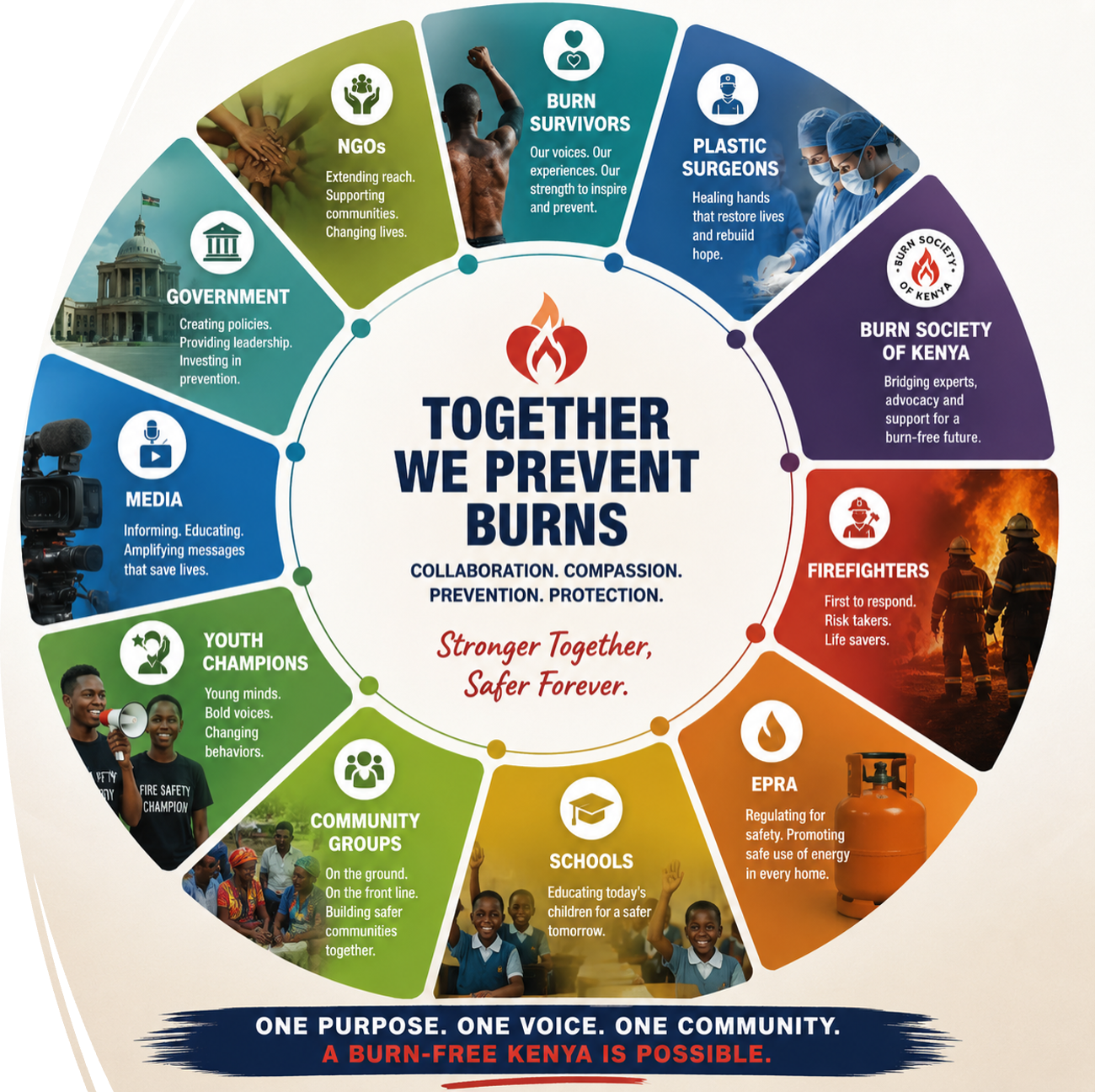
No single organization can create a burn-free world alone. Different contributions are needed from across the community:

  • Burn survivors bring essential lived experience and a powerful voice for change.

  • Plastic surgeons and other medical professionals treat injuries, restore lives and provide hope.

  • Firefighters respond to emergencies while also helping communities understand and reduce risks.

  • Schools equip children with knowledge that can protect them and their families.

  • Youth champions can influence behaviors and become leaders in their communities.

  • Community groups identify local risks and help ensure that prevention efforts reflect local realities.

  • Government agencies establish policies, provide leadership and invest in prevention.

  • The media expands the reach of lifesaving safety messages.

  • NGOs connect partners, support communities and help turn ideas into sustained action.

  • Regulatory agencies promote the safe use of LPG and other household energy sources.

Each partner brings a different form of knowledge, influence or experience. Together, we can build safer homes, stronger communities and a culture in which fire and burn prevention becomes everyone’s responsibility.

Turning Prevention into Community Action

There are many practical ways that collaboration can become action.

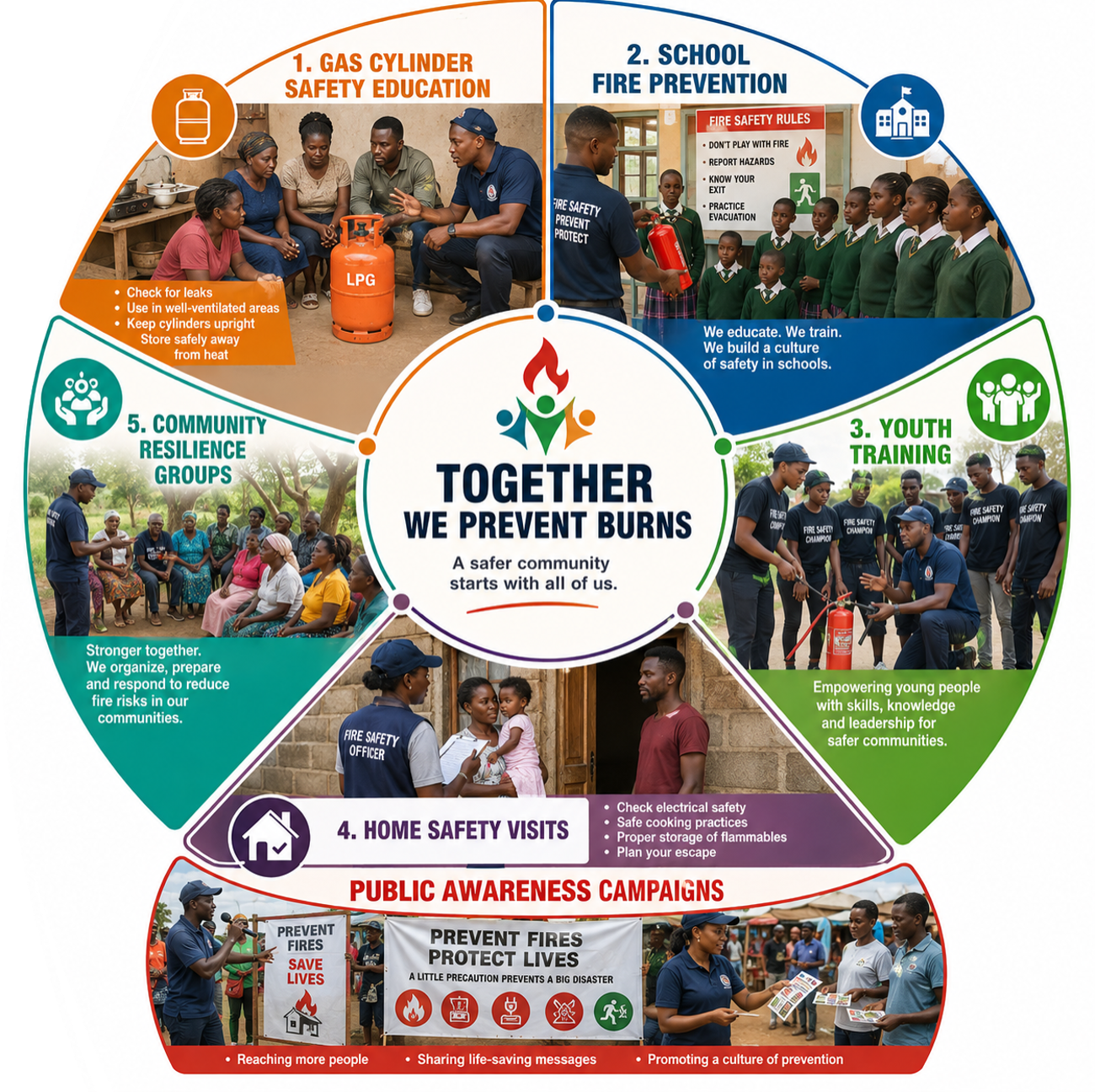
Gas cylinder safety education can help families learn to check for leaks, use cylinders in well-ventilated spaces, keep them upright and store them away from heat. Home safety visits can identify electrical hazards, unsafe cooking practices, improperly stored flammable materials and homes without a clear escape plan.

School fire prevention programs can teach children how to recognize hazards, respond to an alarm and evacuate safely. Youth training can equip young people with practical skills while preparing them to become fire safety leaders.

Community resilience groups can organize residents, identify neighborhood risks and strengthen local emergency preparedness. Public awareness campaigns can then carry these lessons to a much wider audience.

These approaches reflect Africa Fire Mission’s broader model: equip local people with knowledge and skills, support them as they teach others and build lasting prevention capacity within the community.

Survivor Voices Must Be Part of the Solution

Survivors understand the consequences of fire in ways that statistics alone cannot communicate. Their experiences can identify gaps in existing prevention efforts, shape more relevant solutions and inspire others to take safety seriously.

Supporting survivors means helping them heal and rebuild their lives. It also means recognizing them as leaders, educators and advocates whose voices can help prevent future injuries.

What Can We Do Together?

A challenge to everyone involved in burn care and fire safety:

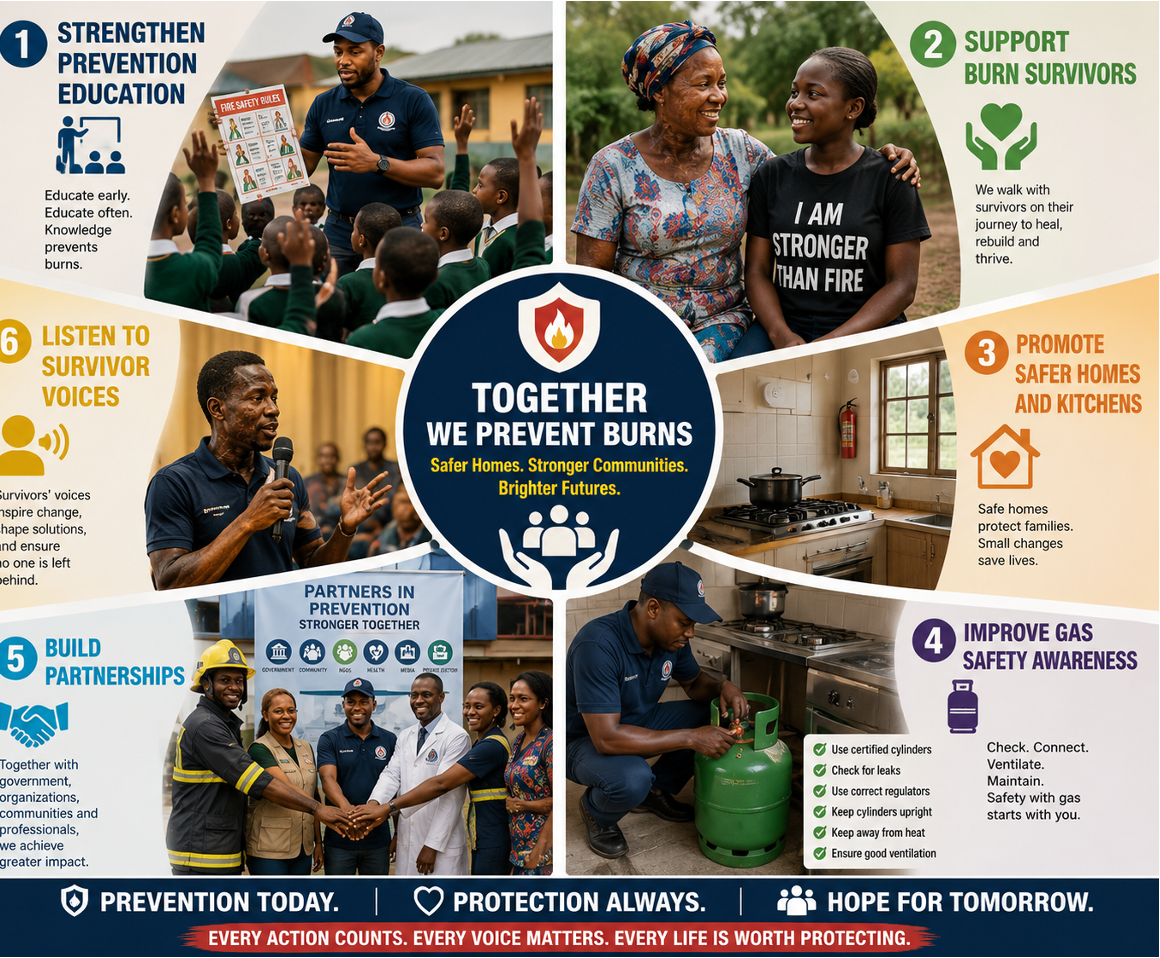
Strengthen prevention education. Support burn survivors. Promote safer homes and kitchens. Improve gas safety awareness. Build partnerships. Listen to survivor voices.

Every organization and every community has a role.

Learn More:

To learn more about Africa Fire Mission’s fire prevention programs and opportunities to partner with us, visit www.AfricaFireMission.org.

To learn more about José’s personal story, watch this video.

Africa Fire Mission’s José Njuki-Imwe Ngunjiri brought a deeply personal message to the annual conference of the Kenya Society of Plastic, Reconstructive and Aesthetic Surgeons in Mombasa, Kenya in August 2026. This article is a summary of the presentation.

About the Author

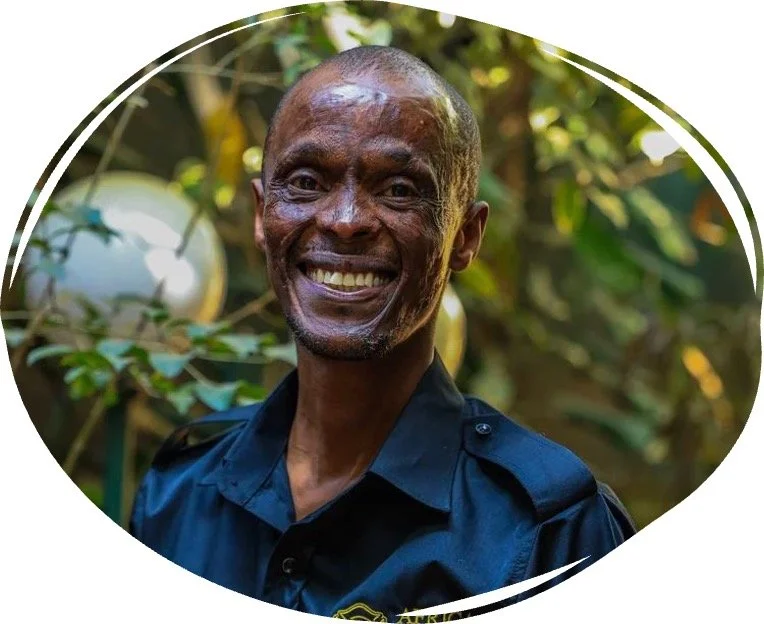
José Njuki-Imwe Ngunjiri serves as a fire safety officer and prevention advocate, but his commitment to this work began with his own experience as a burn survivor. During his presentation, “From Burn Survivor to Prevention Advocate,” he shared how that experience shaped his life and inspired him to turn pain into purpose, scars into action and personal experience into prevention.

Image note: Images in this article were created with the assistance of artificial intelligence to illustrate fire and burn-prevention concepts. They are illustrative and do not depict actual people, incidents or locations.

Leadership Beyond Borders: Metro Chiefs and Africa Fire Mission Partner to Strengthen Fire Service Leadership

Leadership Beyond Borders: Metro Chiefs and Africa Fire Mission Partner to Strengthen Fire Service Leadership

Leadership is built by serving others, embracing new challenges, and learning from peers. That belief is at the heart of the partnership between Africa Fire Mission (AFM) and the Metropolitan Fire Chiefs Association and the initiative to lead trainings in Liberia!

Safe Schools Save Lives: Africa Fire Mission Calls for Stronger School Fire Safety and Preparedness Across Kenya

FOR IMMEDIATE RELEASE

Monday, June 8, 2026

Nairobi, Kenya – June 2026

Africa Fire Mission (AFM) is calling on schools, communities, government leaders, and fire brigades across Kenya to strengthen fire safety education and emergency preparedness following recent school fire incidents that have resulted in the loss of young lives and impacted communities across the country.

Recent tragedies serve as a reminder that fire prevention, preparedness, and effective emergency response must remain priorities for every educational institution. While firefighters play a critical role in responding to emergencies, the greatest opportunity to save lives comes before a fire ever starts.

“Every child deserves to learn in a safe environment,” said Nancy Moore, Co-Founder and Executive Director of Africa Fire Mission. “Schools, fire brigades, government agencies, parents, and community leaders each contribute to creating safer environments for children. By combining strong building safety practices, fire prevention education, and regular preparedness exercises, we can reduce risk and help prevent future tragedies.”

For more than a decade, Africa Fire Mission has partnered with firefighters, educators, community organizations, and emergency responders throughout Kenya to promote fire prevention education and improve community safety. Through school outreach initiatives, firefighter training programs, and community fire safety education, AFM has helped thousands of students, teachers, and community members gain practical skills to prevent fires and respond safely during emergencies.


The Role of Fire Brigades in School Preparedness

Local fire brigades offer valuable expertise that extends far beyond emergency response. Firefighters can assist schools by:

• Conducting fire safety inspections and identifying hazards

• Reviewing evacuation plans and emergency procedures

• Participating in fire drills and evacuation exercises

• Training teachers, staff, and student leaders

• Providing fire prevention education and demonstrations

• Recommending improvements to building safety and emergency access

Strong partnerships between schools and local fire brigades help create a culture of preparedness and ensure that schools are better equipped to respond effectively during emergencies.

Safe Buildings Save Lives

Fire safety begins long before an emergency occurs. AFM encourages school administrators, education officials, and facility managers to regularly evaluate school buildings to ensure critical life safety features are functioning properly and accessible when needed.

Key considerations include:

• Dormitory and classroom doors that can be easily opened during an emergency and swing outward in the direction of evacuation

• Emergency exits that remain unlocked and unobstructed whenever buildings are occupied

• Windows that can be opened or used as emergency escape points where appropriate

• Clearly marked exit routes and assembly areas

• Functional fire extinguishers and fire detection systems

• Safe electrical installations and routine inspections to identify potential hazards

• Adequate supervision and emergency procedures for boarding facilities, especially during nighttime hours

Many school fire tragedies around the world have demonstrated that blocked exits, locked doors, overcrowding, and delayed evacuation can significantly increase the risk of injury and loss of life. Creating safe buildings and regularly practicing evacuation procedures helps ensure that students and staff can respond quickly and safely when emergencies occur.

Fire Prevention Education Matters

“When a fire occurs in a school, seconds matter,” said Jose Ngunjiri, Fire Safety Officer for Africa Fire Mission. “Every student should know at least two ways out of a building, every teacher should know the evacuation plan, and every school should regularly practice emergency drills. Firefighters can respond quickly, but preparation before an emergency is what saves the most lives.”

Ngunjiri added, “Simple measures such as regular fire drills, clear evacuation routes, accessible emergency exits, and strong partnerships with local fire brigades can make a significant difference when an emergency occurs.”

AFM encourages schools throughout Kenya to establish or strengthen fire safety programs that include regular fire drills, staff training, student education, emergency planning, and ongoing collaboration with local emergency responders.

As Kenya continues to grow and develop, investments in fire prevention education and preparedness represent one of the most effective ways to protect students, educators, and communities. Through collaboration between schools, fire brigades, government agencies, and community organizations, meaningful progress can be made toward preventing future tragedies.

About Africa Fire Mission

Africa Fire Mission is committed to building and increasing the sustainable capacity of the fire services across Africa through training, empowerment, support, and encouragement. Since 2012, AFM has partnered with firefighters, emergency responders, educators, and community organizations to strengthen fire prevention, preparedness, and emergency response capacity across Africa.

Through its Fire Safety Officer program, school fire prevention initiatives, firefighter training programs, and community outreach activities, Africa Fire Mission works alongside local partners to create safer communities and reduce the impact of fire-related emergencies.

Media Contact: Africa Fire Mission

José Njuki-Imwe Ngunjiri

Fire Safety Officer

Jose@africafiremission.org

+1 513 620 4236

Nancy L. Moore

Co-Founder and Executive Director

Africa Fire Mission

nancy@africafiremission.org

www.africafiremission.org

Building a Mental Health System of Care: Supporting the Resilience and Sustainability of Fire Brigades and Emergency Services

Written by Nancy L. Moore, MSW, LISW-S, CPCC

Executive Summary

First responders routinely respond to situations involving trauma, loss, and extreme stress. These experiences accumulate over time and can have profound impacts on physical health, emotional wellbeing, decision-making, and the long-term sustainability of fire brigades. Despite the critical role first responders play in protecting communities, first responder mental health is often overlooked, particularly in low- and middle-income countries.

Across Africa, many fire brigades operate with limited resources and minimal access to formal mental health support systems. First responders frequently experience repeated exposure to traumatic incidents such as fatal fires, road traffic accidents, disasters, and community violence. Without appropriate support structures, these experiences can lead to burnout, substance misuse, depression, family strain, and early departure from the profession.

This white paper outlines the importance of implementing a First Responder System of Care, a structured approach that supports first responder wellbeing before, during, and after traumatic incidents. The system includes prevention strategies, Stress First Aid (also referred to as Psychological First Aid), peer support programs, Critical Incident Stress Management (CISM), access to professional mental health services, and departmental policies that promote resilience.

By implementing a systematic approach to first responder mental health, fire brigades can protect their most valuable resource—their people—while strengthening operational readiness and long-term sustainability.

Africa Fire Mission Announces New Partnership with Firefighters Without Borders

Africa Fire Mission Announces New Partnership with Firefighters Without Borders

Africa Fire Mission is excited to announce a new partnership with Firefighters Without Borders! This partnership will strengthen international collaboration in fire service training, equipment support, and professional exchange.

Strengthening Wildland Fire Response in Wajir County

Strengthening Wildland Fire Response in Wajir County

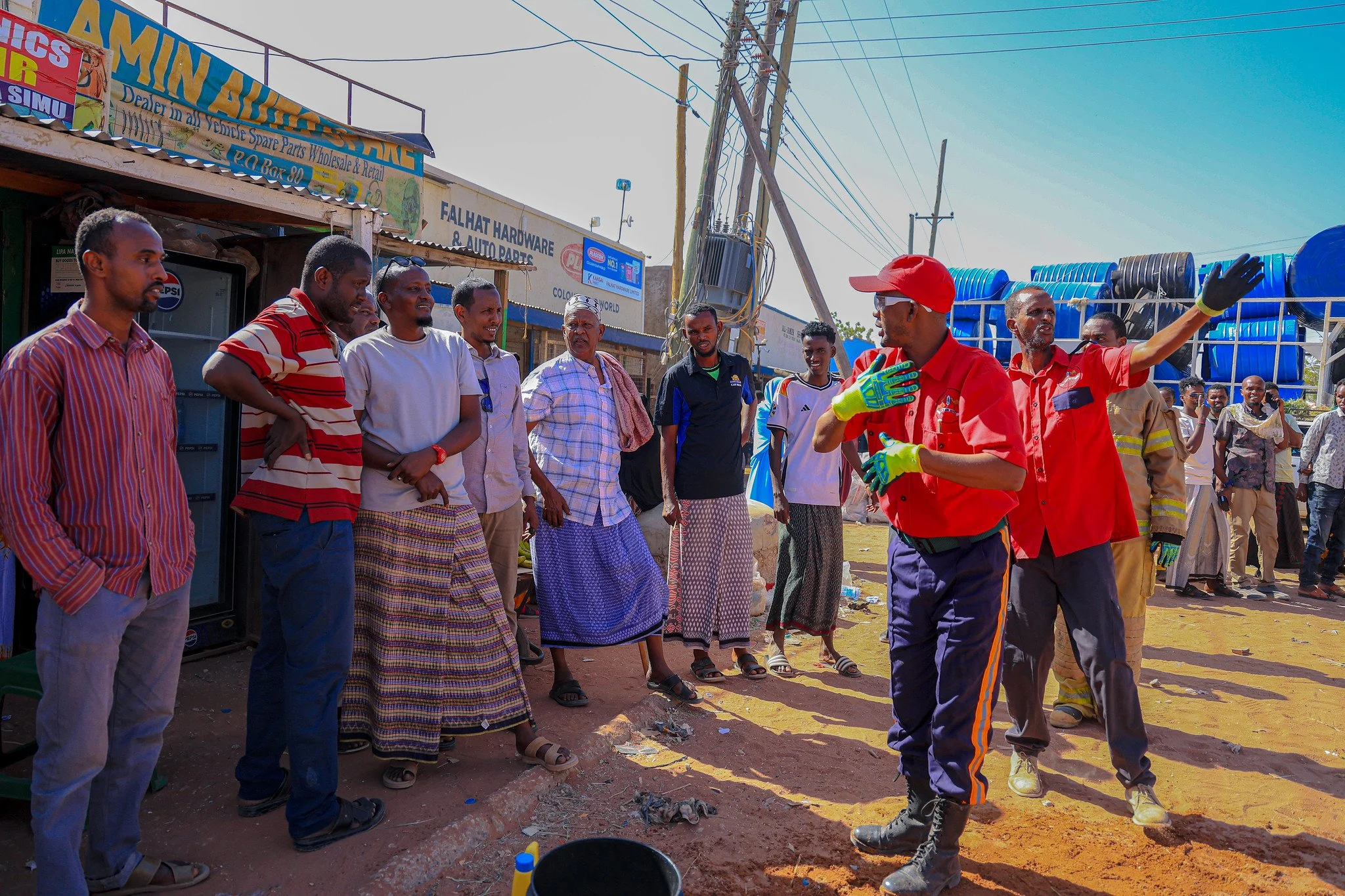
In January 2026, Africa Fire Mission continued its partnership with Fire Aid through a follow-up training mission in Wajir County, Kenya, demonstrating what long-term, sustainable capacity building can look like in action.

Recognizing the Award Winners at the 2025 EMS and Fire Symposium, Mombassa, Kenya

Recognizing the Award Winners at the 2025 EMS and Fire Symposium, Mombassa, Kenya

We would like to recognize the different award winners from this year’s symposium to highlight the ever-growing fire service in Africa and the determination of first responders in Kenya and beyond.

Highlighting the 2025 Kenya EMS & Fire Symposium and Competition

Highlighting the 2025 Kenya EMS & Fire Symposium and Competition

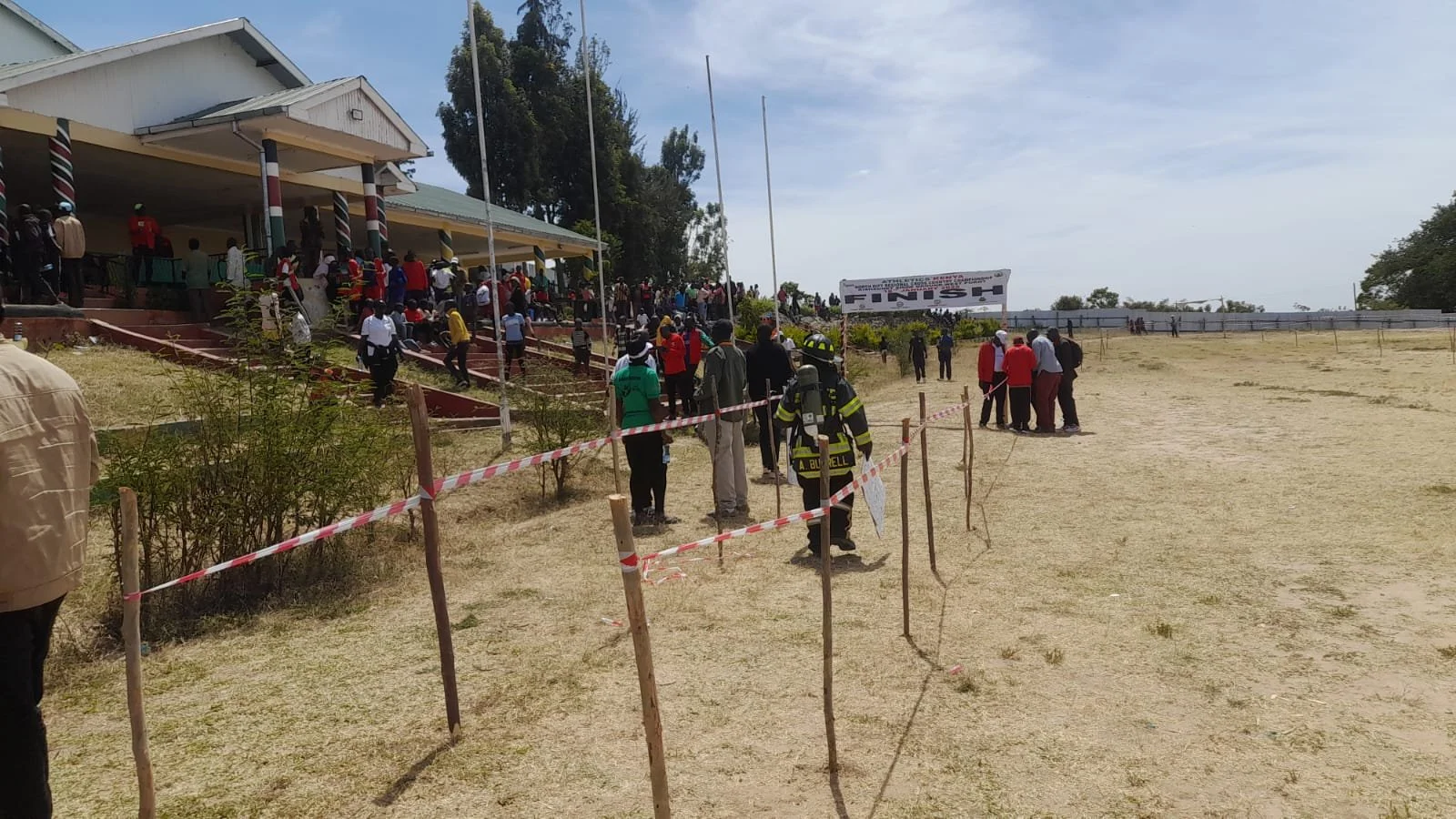
In November, the AFM team travelled to Mombasa, Kenya, for this year’s annual EMS & Fire Symposium and Competition. During this week long event, over five hundred participants from Kenya and neighboring countries gathered for hands-on training, fellowship, and first responder competitions.

The Impact of Leadership Training on County Fire and EMS Services

The Impact of Leadership Training on County Fire and EMS Services

“The 2025 Fire and EMS Symposium at Bandari Academy in Mombasa provided an excellent platform for counties across Kenya to strengthen their emergency response capacity. As an instructor in the leadership class, I witnessed the dedication of Kenya’s firefighters and paramedics first-hand and saw the critical need for strong, ethical, and modern leadership within the sector.”

Suleiman Adan Issack, Chief Fire Officer of Mandera County, writes about his experience at the 2025 Kenya Symposium

Metro Fire Chiefs Association Sign Memorandum of Understanding with AFM

Metro Fire Chiefs Association Sign Memorandum of Understanding with AFM

On May 1st, 2025, leaders of the Metropolitan Fire Chiefs Association (Metro Chiefs) signed a Memorandum of Understanding (MoU) with Africa Fire Mission! As part of this MoU, Africa Fire Mission strengthened its relationship with Fire Chiefs from Metro fire departments and will be able to help increase support for fire departments in Africa.

Advancements in Mombasa's Fire Department

by Ibrahim Basafar

My name is Ibrahim Basafar, and I serve as the County Chief Fire Officer for the Mombasa County Government. I am also a PhD finalist in Law Enforcement and Legal Justice Systems at Mount Kenya University.

I recall joining the fire department from the Inspectorate department when His Excellency Abdulswamad Shariff Nassir was elected as the Governor of Mombasa County.

During a visit to the main fire station in October 2022, I was quite surprised by the conditions. There was no dedicated CFO office, recreation center, or classroom. The dormitories were in poor condition, infested with bed bugs, and lacked basic amenities like paint or fans.

The station was operating with only one functional fire engine with an unstable and leaking tank. Additionally, there were broken and leaking fire water hoses, no FFF foam, no allocated fuel, and a lack of essential protective gear such as fire tunics and breathing apparatus. There was also no established curriculum, control room, OB facility, or operational system in place. Sadly, the station had become known as a place to transfer officers with disciplinary issues from other departments.

Governor Nassir and I agreed that the fire department had been neglected and needed a complete transformation into a model department for other county and national entities to learn from. Our initial focus was on enhancing the capacity and discipline of our officers. Following this, we successfully increased the annual budget allocation for the fire department.

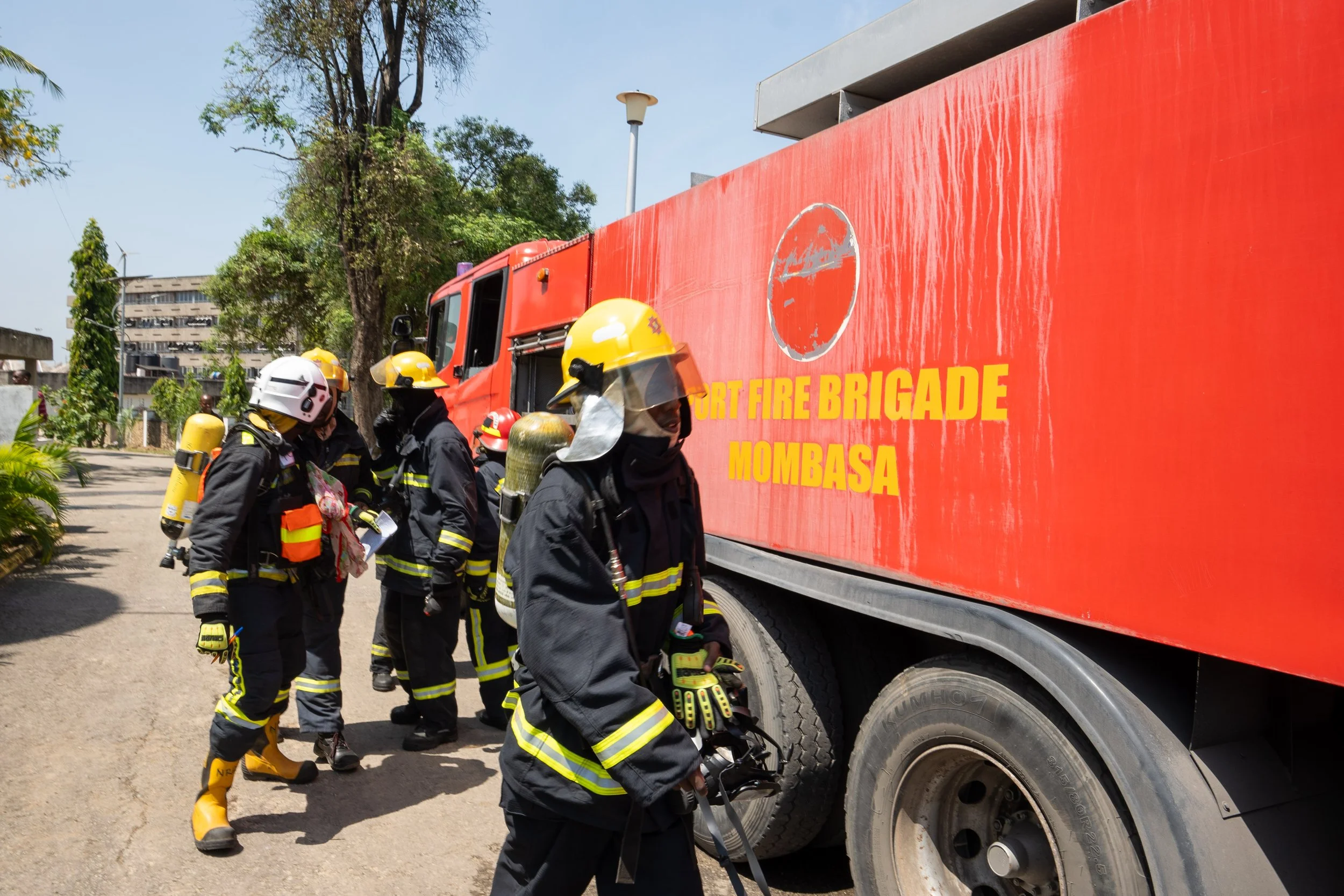
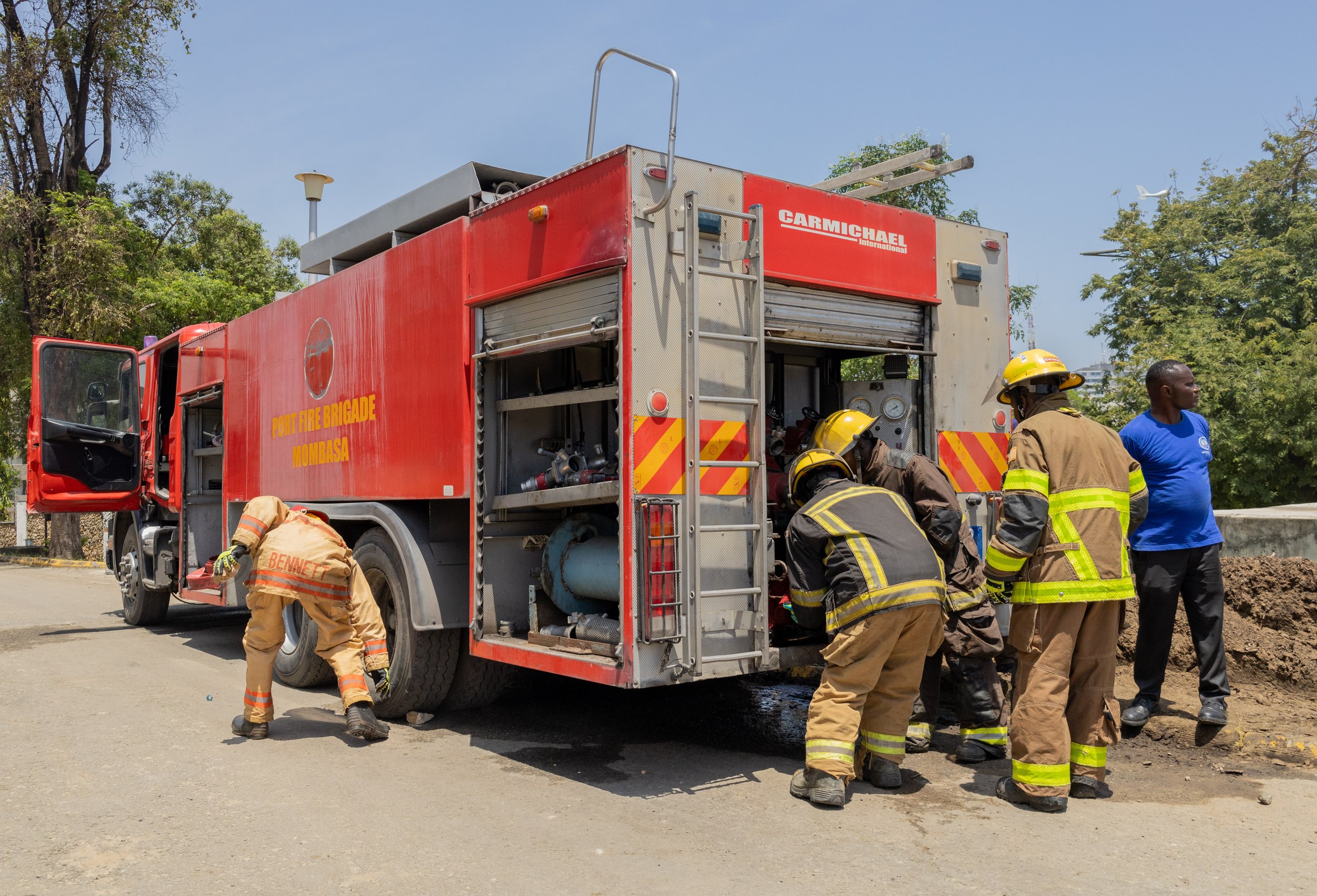
Today, we have 102 fire officers who have received comprehensive training in firefighting techniques, OSHA standards, first aid, and water rescue, along with internal supervisory training. Mombasa now has an Emergency Operation Center, overseen by a Fire Officer, which manages county-wide disaster and emergency responses. We have five operational fire engines and one rescue truck equipped with all necessary tools, including extraction equipment for road traffic accidents. All dormitories have been renovated, and the three main stations in Likoni, Changamwe, and Mvita have been refurbished to meet a standard fire department aesthetic.

Currently, we have 60 new, UK-standard fire tunic suits acquired by the county (not donated), 54 self-contained breathing apparatuses, UK-standard fire water hoses with branch nozzles, and a storage of 10,000 liters of AFFF foam. Continuous daily classes are conducted in all three stations using a standardized fire curriculum. Furthermore, a new fire station in Kiembeni is nearing completion at 85% and is expected to be fully operational by June 2025.

We have also extended our training to other counties and institutions, including 60 officers from Kiambu County Fire, 40 from Nairobi, 98 from Tana River (including Chief Wako), 300 individuals from various universities and colleges, and 220 ongoing trainees at the Mombasa Inspectorate school. In 2024, we conducted 52 school inspections and training sessions, as well as 50 community awareness programs.

Presently, 50% of our officers are fully equipped with standard fire tunic suits, boots, helmets, self-contained breathing apparatuses, and working uniforms.

With the continued support of His Excellency Abdulswamad Shariff Nassir, we are optimistic about achieving 100% PPE for the remaining officers in the next financial year. We also aim to build an additional fire station in Nyali, initiate a kitchen welfare program for our firefighters, and implement promotions for the existing force.

It truly makes our day when our firefighters return home safely with a sense of accomplishment.


Chief Fire Officer Ibrahim Basafar is Mombasa County Government’s Fire Chief. He is a PhD Finalist in Law Enforcement and Legal Justice Systems at Mount Kenya University. He is an experienced Fire Officer and safety expert.


“It’s incredible to see the advocacy and advancement taking place in the fire service in Mombassa. Collaboration, relationships, advocacy, and tenacity have been required to improve Mombassa’s fire service. We hope that other fire services in Africa can learn from what Mombassa is doing!”

- Nancy Moore, Africa Fire Mission, Executive Director

AFM Launches Active Bleeding Control Program in Kenya

AFM Launches Active Bleeding Control Program in Kenya

In March 2025, Africa Fire Mission (AFM) proudly launched our Active Bleeding Control Program in Kenya, a significant step toward enhancing emergency response capabilities in the region. This initiative addresses the critical need for immediate bleeding control, especially in areas where access to medical facilities may be delayed.

Donating Fire Equipment, Medical Equipment & Training Supplies at FDIC 2025

Africa Fire Mission accepts personal protective equipment in clean and serviceable condition. We seek to serve our fellow firefighters with this equipment. Please consider the firefighters you will be impacting when making your donation - We ask that personal protective equipment be cleaned prior to donation. We request that boots and gloves be cleaned and matched prior to donation. Please see our specifications below regarding accepted equipment.

Leadership Training in Kenya

Leadership Training in Kenya

The 2024 All Kenya EMS and Fire Symposium held at Jomo Kenyatta International Airport, Nairobi, Kenya integrated several fields of training. Fire Prevention, Health and Wellness, Firefighting Tactics, Emergency Medicine, and Leadership were all incorporated topics. AFM team member Tim Baker writes about his experience as a leadership instructor!