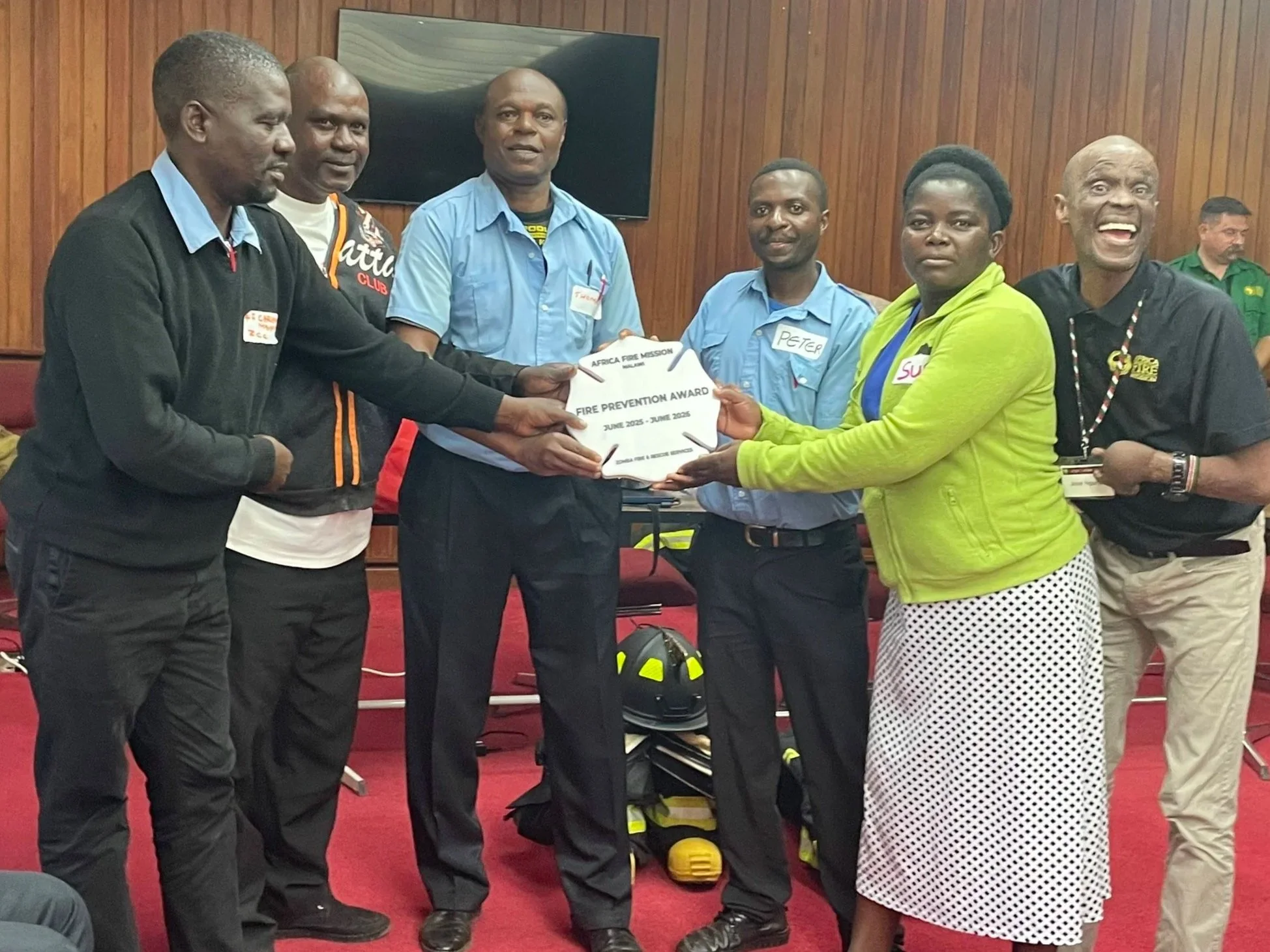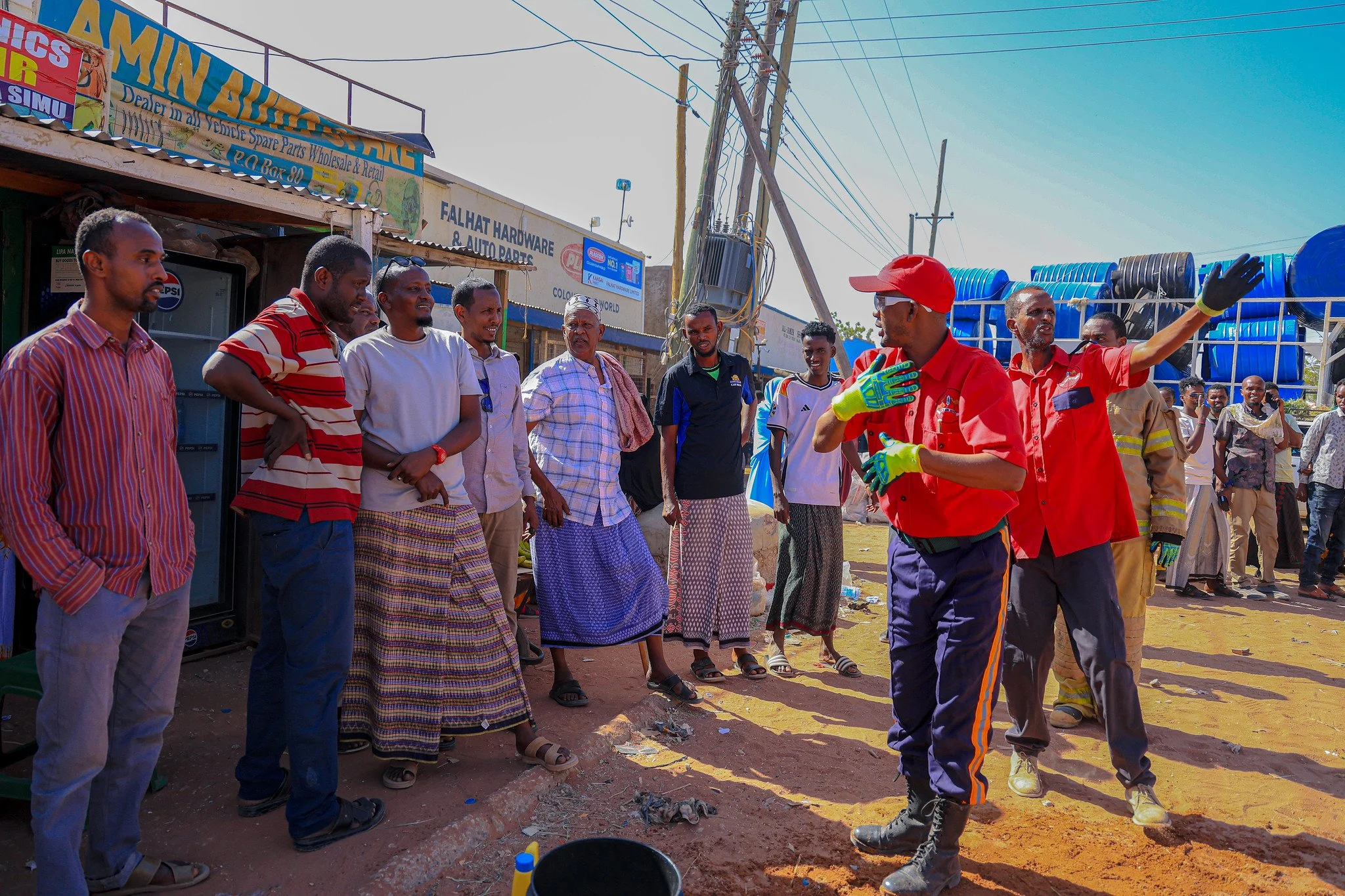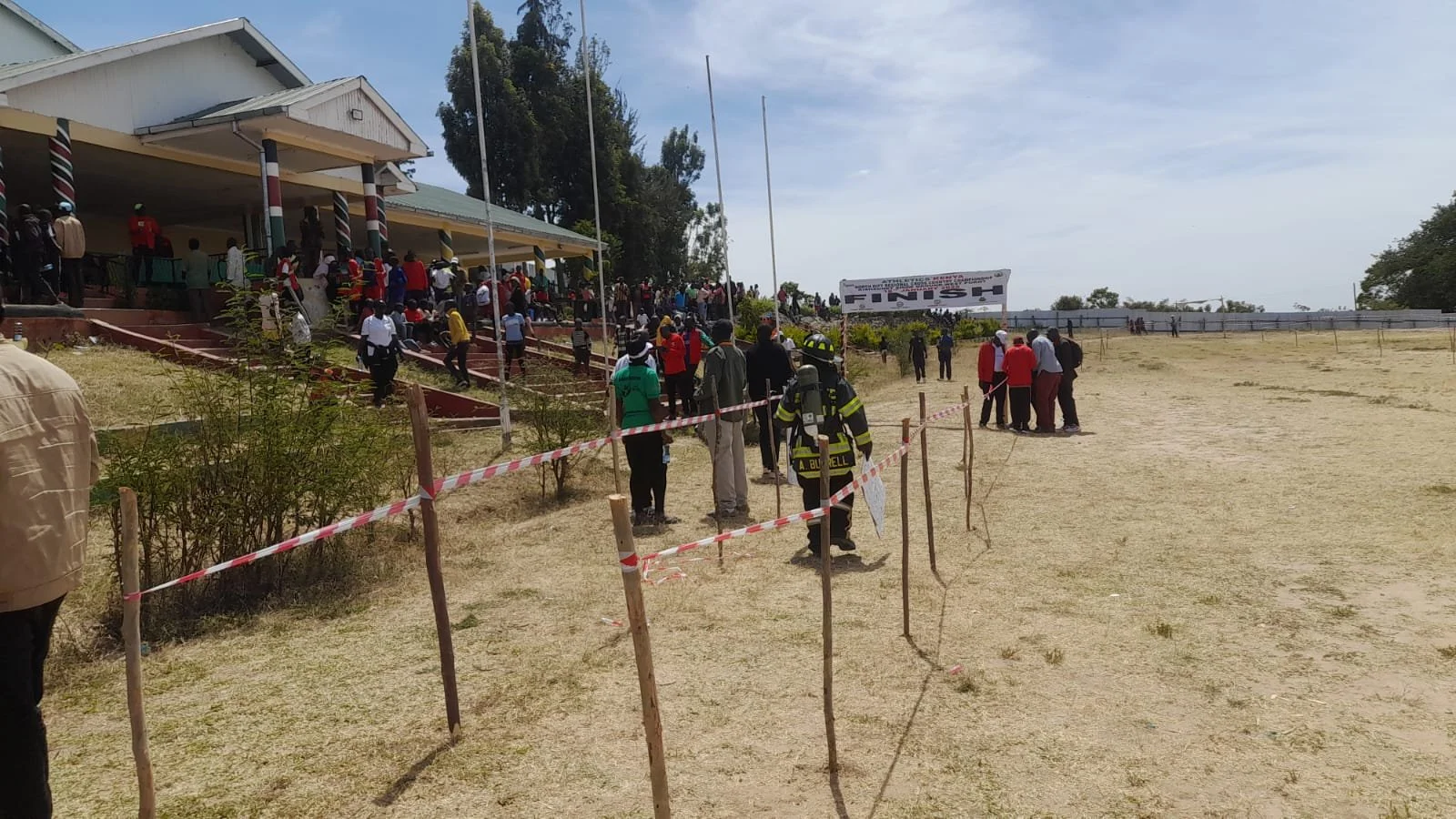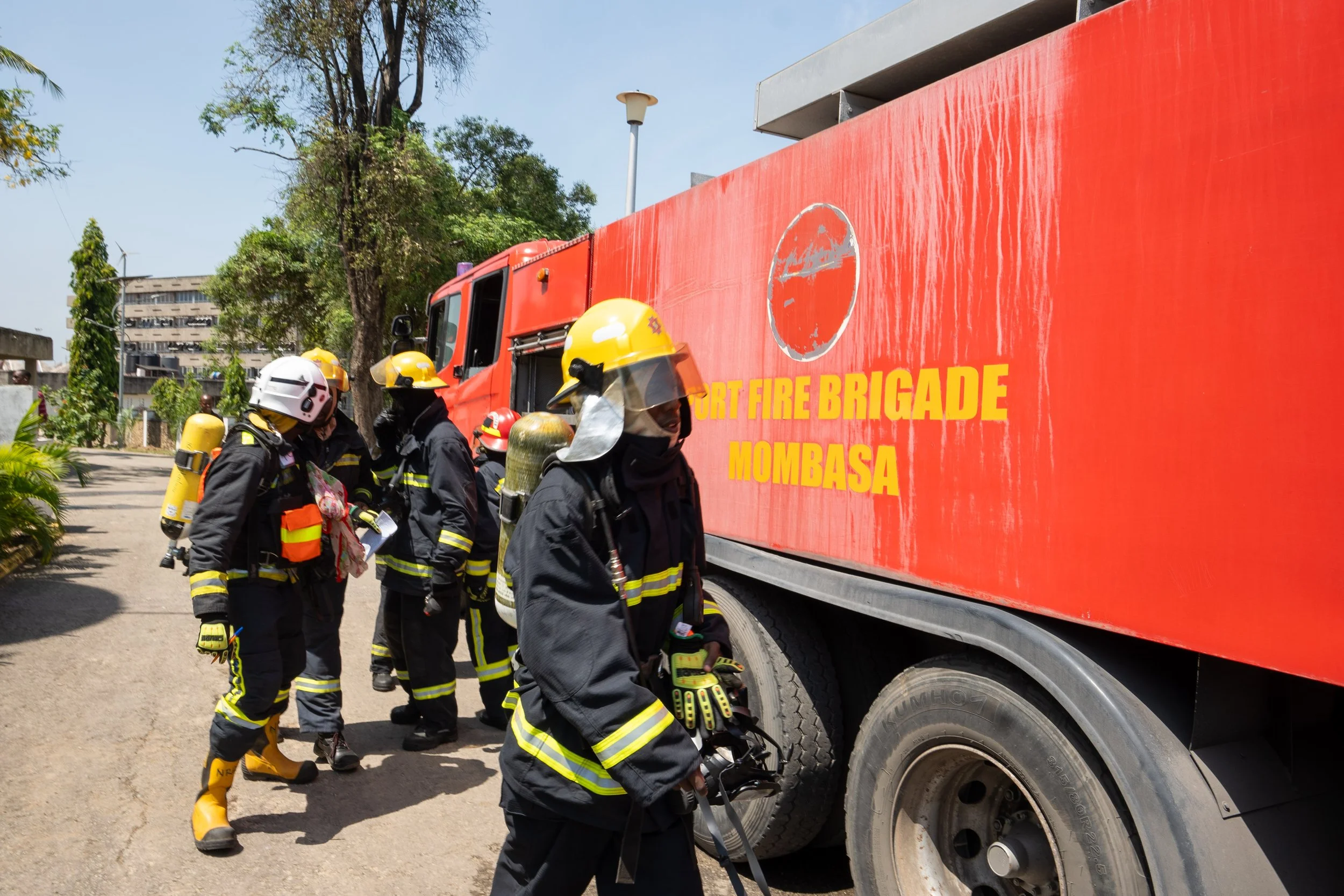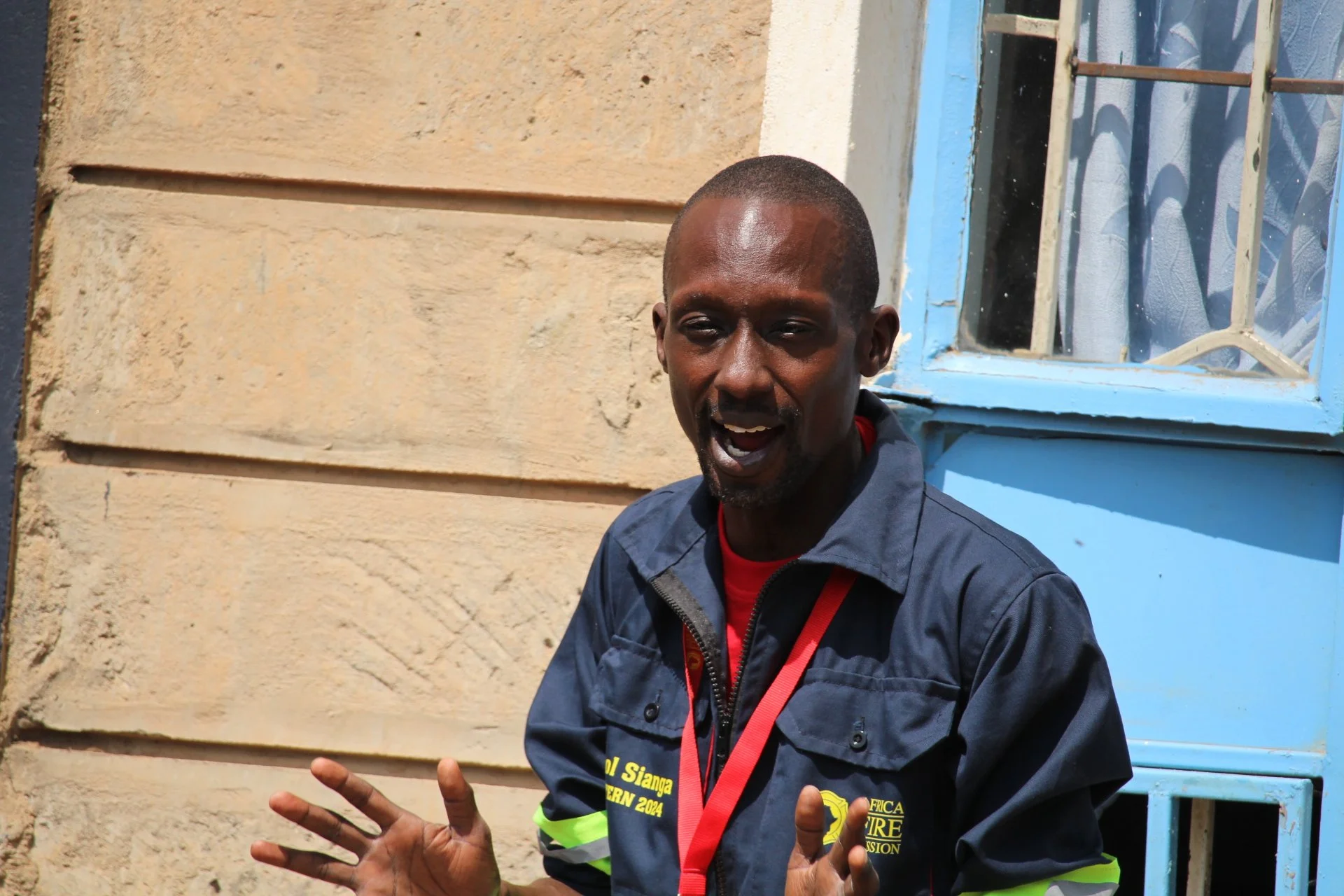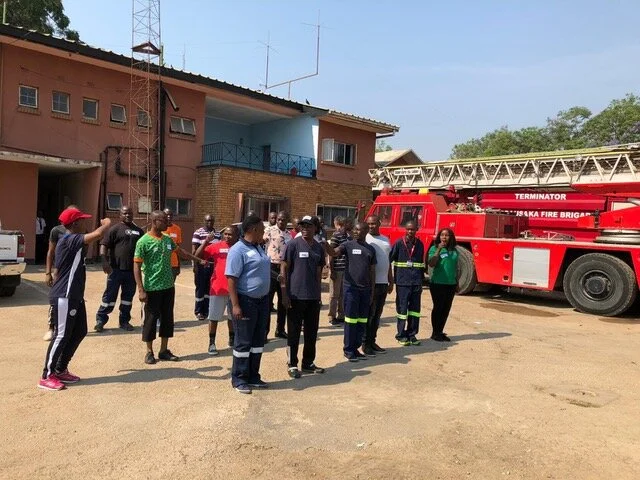
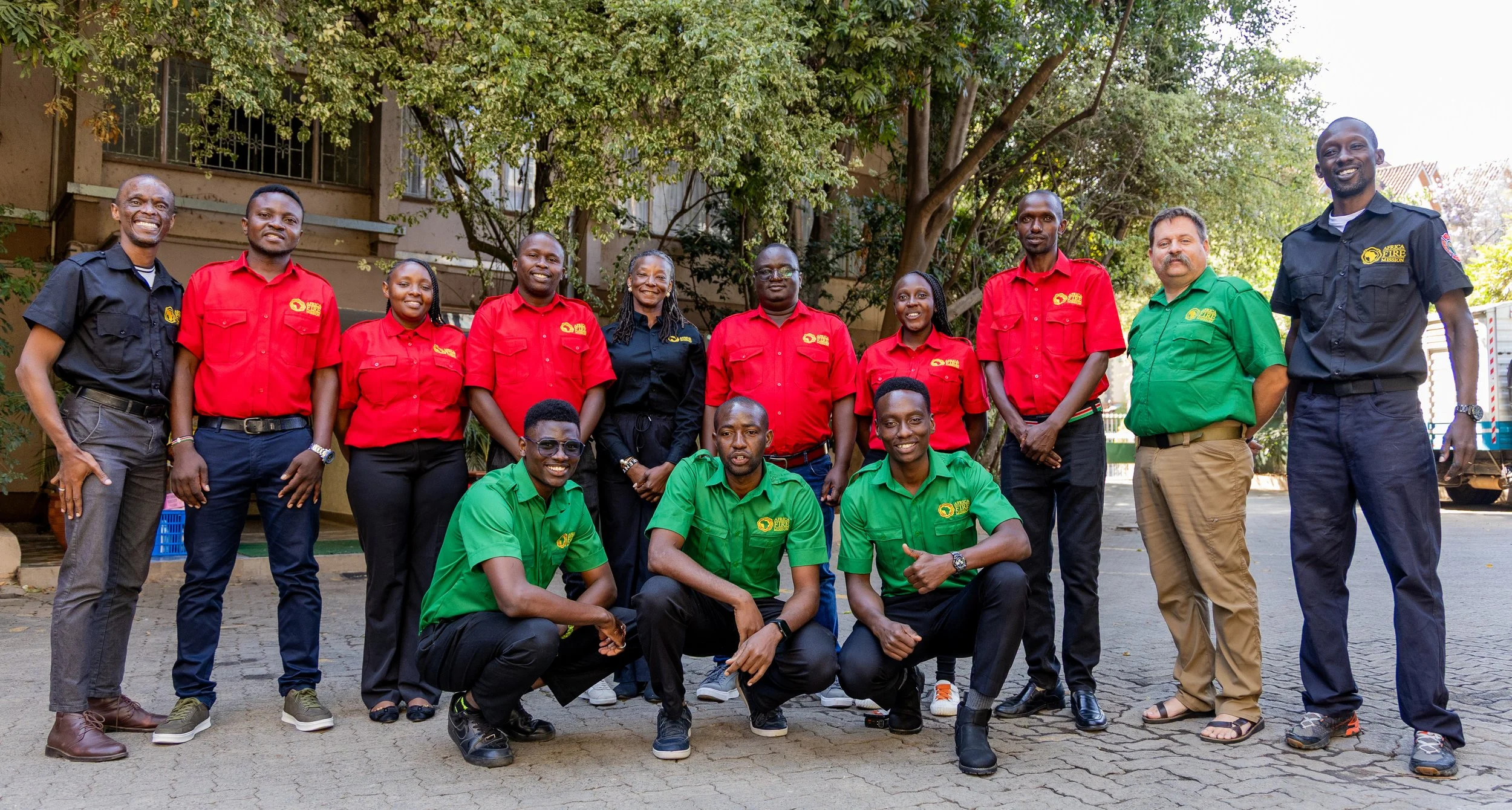
The 2026 internship has concluded, but its story is still being written, through every lesson shared, every drill conducted and every community made safer. Read more about the 2026 Fire Prevention Internship!

FOR IMMEDIATE RELEASE
Monday, June 8, 2026
Nairobi, Kenya – June 2026
Africa Fire Mission (AFM) is calling on schools, communities, government leaders, and fire brigades across Kenya to strengthen fire safety education and emergency preparedness following recent school fire incidents that have resulted in the loss of young lives and impacted communities across the country.
Recent tragedies serve as a reminder that fire prevention, preparedness, and effective emergency response must remain priorities for every educational institution. While firefighters play a critical role in responding to emergencies, the greatest opportunity to save lives comes before a fire ever starts.
“Every child deserves to learn in a safe environment,” said Nancy Moore, Co-Founder and Executive Director of Africa Fire Mission. “Schools, fire brigades, government agencies, parents, and community leaders each contribute to creating safer environments for children. By combining strong building safety practices, fire prevention education, and regular preparedness exercises, we can reduce risk and help prevent future tragedies.”
For more than a decade, Africa Fire Mission has partnered with firefighters, educators, community organizations, and emergency responders throughout Kenya to promote fire prevention education and improve community safety. Through school outreach initiatives, firefighter training programs, and community fire safety education, AFM has helped thousands of students, teachers, and community members gain practical skills to prevent fires and respond safely during emergencies.
The Role of Fire Brigades in School Preparedness
Local fire brigades offer valuable expertise that extends far beyond emergency response. Firefighters can assist schools by:
• Conducting fire safety inspections and identifying hazards
• Reviewing evacuation plans and emergency procedures
• Participating in fire drills and evacuation exercises
• Training teachers, staff, and student leaders
• Providing fire prevention education and demonstrations
• Recommending improvements to building safety and emergency access
Strong partnerships between schools and local fire brigades help create a culture of preparedness and ensure that schools are better equipped to respond effectively during emergencies.
Safe Buildings Save Lives
Fire safety begins long before an emergency occurs. AFM encourages school administrators, education officials, and facility managers to regularly evaluate school buildings to ensure critical life safety features are functioning properly and accessible when needed.
Key considerations include:
• Dormitory and classroom doors that can be easily opened during an emergency and swing outward in the direction of evacuation
• Emergency exits that remain unlocked and unobstructed whenever buildings are occupied
• Windows that can be opened or used as emergency escape points where appropriate
• Clearly marked exit routes and assembly areas
• Functional fire extinguishers and fire detection systems
• Safe electrical installations and routine inspections to identify potential hazards
• Adequate supervision and emergency procedures for boarding facilities, especially during nighttime hours
Many school fire tragedies around the world have demonstrated that blocked exits, locked doors, overcrowding, and delayed evacuation can significantly increase the risk of injury and loss of life. Creating safe buildings and regularly practicing evacuation procedures helps ensure that students and staff can respond quickly and safely when emergencies occur.
Fire Prevention Education Matters
“When a fire occurs in a school, seconds matter,” said Jose Ngunjiri, Fire Safety Officer for Africa Fire Mission. “Every student should know at least two ways out of a building, every teacher should know the evacuation plan, and every school should regularly practice emergency drills. Firefighters can respond quickly, but preparation before an emergency is what saves the most lives.”
Ngunjiri added, “Simple measures such as regular fire drills, clear evacuation routes, accessible emergency exits, and strong partnerships with local fire brigades can make a significant difference when an emergency occurs.”
AFM encourages schools throughout Kenya to establish or strengthen fire safety programs that include regular fire drills, staff training, student education, emergency planning, and ongoing collaboration with local emergency responders.
As Kenya continues to grow and develop, investments in fire prevention education and preparedness represent one of the most effective ways to protect students, educators, and communities. Through collaboration between schools, fire brigades, government agencies, and community organizations, meaningful progress can be made toward preventing future tragedies.
About Africa Fire Mission
Africa Fire Mission is committed to building and increasing the sustainable capacity of the fire services across Africa through training, empowerment, support, and encouragement. Since 2012, AFM has partnered with firefighters, emergency responders, educators, and community organizations to strengthen fire prevention, preparedness, and emergency response capacity across Africa.
Through its Fire Safety Officer program, school fire prevention initiatives, firefighter training programs, and community outreach activities, Africa Fire Mission works alongside local partners to create safer communities and reduce the impact of fire-related emergencies.
Media Contact: Africa Fire Mission
José Njuki-Imwe Ngunjiri
Fire Safety Officer
Jose@africafiremission.org
+1 513 620 4236
Nancy L. Moore
Co-Founder and Executive Director
Africa Fire Mission
nancy@africafiremission.org
www.africafiremission.org
by Retired Deputy Chief Howard Cohen
Firefighters, emergency medical technicians (EMTs) and other first responders routinely confront some of the most devastating scenes imaginable. Overtime, the accumulative impact of providing care and support to victims of these traumatic events takes a huge toll on the first responders emotional, psychological and spiritual well being. Repeated exposure to gruesome accident scenes and wrecked lives has been documented through numerous studies throughout the world to contribute to the deterioration of first responders mental health, as well as inflicting a moral injury on them. Moreover, trauma induced stress not only harms first responders, but it also negatively impacts job performance, undermines team cohesiveness and damages family relationships.
While it is impossible for first responders to avoid encountering horrendous accident scenes, there are proven peer-based intervention strategies that improves resilience and helps restore mental well being.
Critical Incident Stress Management (CISM) is a comprehensive, integrated, systematic and multicomponent strategy widely used in many places throughout the world. It was developed by Dr. Jeffrey T. Mitchell in the early 1980s, and promotes pre-event stress and crisis management education, planning and policy development, as well as training for the management of traumatic stress.
Stress First Aid (sometimes referred to as Psychological First Aid) is another important peer-based intervention program. Unlike CISM, Stress First Aid requires very little training. Stress First Aid is built upon three primary objectives: (1) recreate a sense of safety, (2) establish meaningful social connections, (3) reestablish a sense of efficacy. Whereas CISM is orientated toward first responders, Stress First Aid is effective with civilians as well. Stress First Aid immediately address physical needs, e.g. food, water, sleep, bathroom breaks and determines if additional help, formal or informal, is necessary. CISM typically occurs one or two days later and assumes these basic physical needs have been addressed. Both programs address symptoms of stress and include education on how to mitigate unhealthy behaviors. The biggest difference is that CISM is a comprehensive program that includes Stress First Aid as a component. Another difference is that it takes several days to become trained in CISM, whereas Stress First Aid, as a stand alone peer-based intervention, requires little training.
CISM and Stress First Aid are both peer-based programs. This means that the program is presented peer to peer. This is important because first responders tend to be reluctant to open up to outsiders, or those who are not or were not first responders. Although there are many different reasons for this, what is important is that the best way to provide critical early intervention to intercept post traumatic problems from developing later is through a peer to peer program.
Peer to Peer Based Mental Health Programs for First Responders
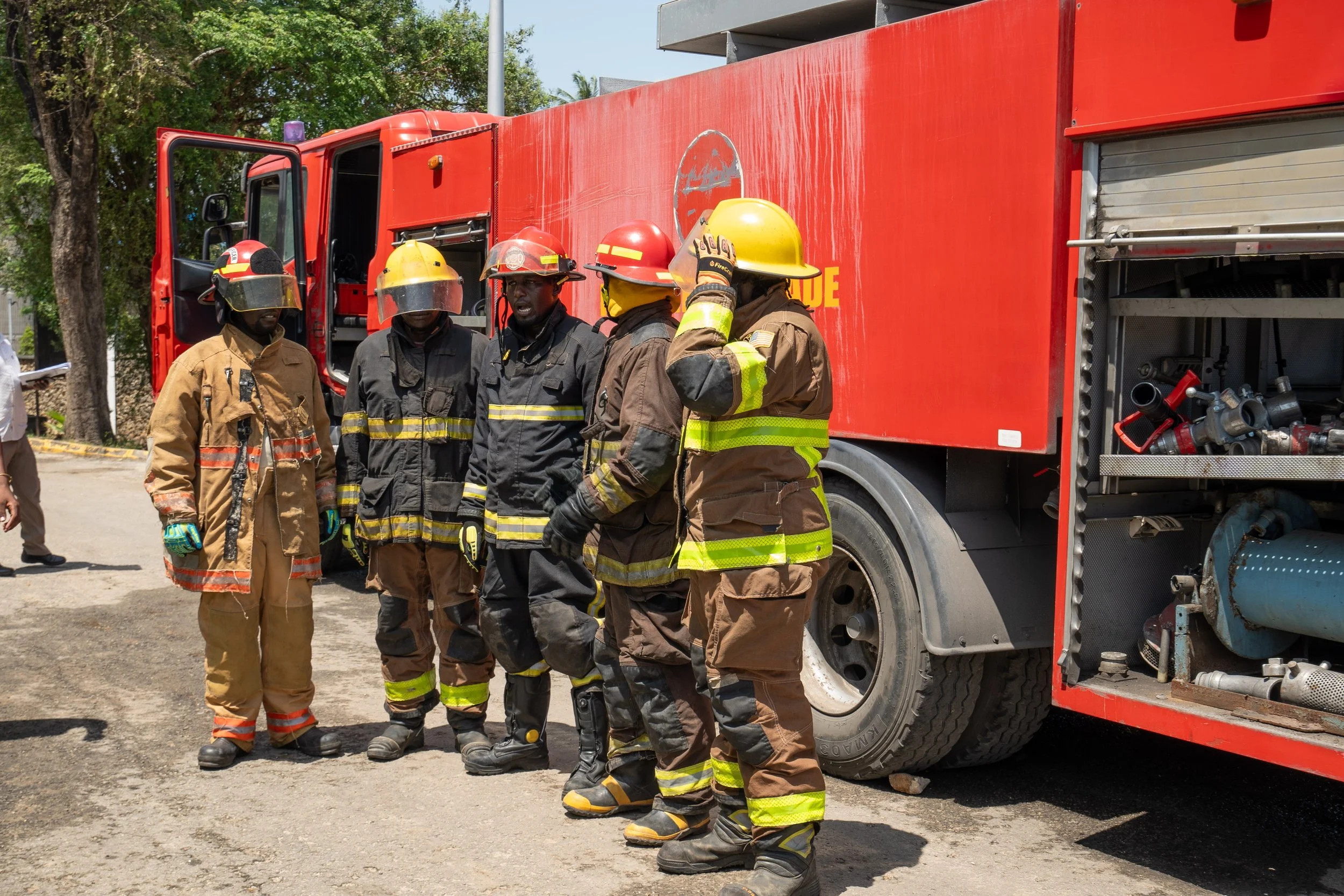
Peer to peer communication is key to many support systems.
It is often said that those who provide care for others cannot do their job if they do not take care of themselves. While the availability of supporting data varies from country to country, the reality is that first responders everywhere are more likely to suffer from psychological distress due to job stress, repeated exposure to trauma, lack of sleep, the physical demands of the job, lack of resources and working long hours or multiple jobs. Increasingly world wide, we are beginning to see the consequences of the stressors of the job. Unfortunately, first responders are often reluctant to seek out professional therapy primarily because of cultural stigmas, both within the first responder world and/or the wider society, because of mistaken belief that dangerously equates seeking help with weakness. First responders are often more open to participating in peer to peer to programs. Moreover, numerous studies throughout the world found that peer to peer program are the most effective way to mitigate long term negative consequences of secondary trauma.
The physical, emotional, mental and spiritual health of first responders is critical to their being able to safely and efficiently perform their duties to protect citizens and property. Therefore, it is important for first responders to have access to peer to peer-based programs with properly trained peer leaders.
Training
Fortunately, training first responders to serve as peers for others is neither complicated nor expensive. The first step to provide Stress First Aid training for every first responder. These trainings typically take several hours and can be done in person or online. The First Responder Center for Excellence Offers several relevant training: https://firstrespondercenter.org/
Once concepts of Stress First Aid have been put into place for first responders, the next step is training peers in Crisis Incident Stress Management. This involves several days of training by a trained trainer. You can reach out to Africa Fire Mission if you are interested in receiving this training.
Conclusion
Eddy Kimani, a celebrated Kenyan media personality who battled bouts of mental illness, said Kenyan men were more prone to bouts of depression that lead to suicide due to stereotypes about what it means to be a man. As Kimani so aptly describes it, “Men are generally taking their lives in Kenya because of the warped understanding of what it is to be a man. An African man guards up his feelings because he fears the repercussions in a society that has taught men that they do not cry, that they are not supposed to show their emotions or be vulnerable.” You can read more about Kimani’s perspective here >
Kimani’s description is often also true of first responders who are often required to stuff their emotions while responding to traumatic events and then afterwards because of social pressure.
The good news is that introducing easy to learn and inexpensive peer-based interventions can save lives and improve the mental health and spiritual wellness of first responders, leading to them better serving their communities and caring for their families.
by Africa Fire Mission Training Team, Utilizing AI Technology
Firefighters are often the first to respond to life-threatening emergencies, whether it’s a cardiac arrest, choking incident, trauma, or another sudden crisis. In 2025, the American Heart Association (AHA) released its latest comprehensive update to the Cardiopulmonary Resuscitation (CPR) and Emergency Cardiovascular Care (ECC) Guidelines, and these changes matter for every member of the African firefighter community.
In a recent Weekly Virtual Firefighter Training, AFM instructor and EMS expert Eric Saunders focused on translating these guideline updates into practical, lifesaving actions that you can apply in the field. Watch the training for strategies you can apply, wherever you’re training or responding.
Watch this Weekly Virtual Firefighter Training for updates on CPR/BLS Guidelines
What’s New in the 2025 AHA Guidelines
Every five years, the AHA reviews the latest science to update its guidance for CPR and emergency use. One update unifies the chain of survival for adults and children into one streamlined model. Another clearly recommends 5 back blows followed by 5 abdominal thrusts if a conscious adult or child is choking, while rescuers should alternate between 5 back blows and 5 heel of hand chest thrusts for infants. Read more about the updates here.
Why These Updates Matter for Firefighters
Whether you are stationed at an urban firehouse or volunteering in a rural brigade, cardiac emergencies, choking incidents, and sudden collapses are not uncommon. Updated global science means:
· Faster, more effective responses
· Increased survival chances for victims
· More confidence in training and real-world performance
Firefighters are not just fire suppressors, they are lifesavers in every sense. Staying up-to-date with global standards ensures that the care you provide is backed by the best available evidence.
Want to deepen your lifesaving skills and stay current with international resuscitation science? Use these opportunities from AFM to strengthen your skills:
· Join our Weekly Virtual Trainings for African Firefighters
· Subscribe to AFM’s YouTube Channel
· Access our Resources and Training Materials
Stay safe, stay prepared, and keep training!
In January 2026, Africa Fire Mission continued its partnership with Fire Aid through a follow-up training mission in Wajir County, Kenya, demonstrating what long-term, sustainable capacity building can look like in action.
Resources from Kristina Stiles
Saving Lives is Not Enough Report - A casualty-centred proposal identifying how Fire and Rescue Services can improve pre-hospital care and quality of life outcomes for burn survivors.
The Family Oops and Burns First Aid Book - A children's book created to support children and their families learning about burns prevention and first aid principles together. The book describes an accident prone family who are not burns aware, who have to go to school to learn about burn safety and first aid within the home. This book is a recommended reading for all nursery school teachers.
20 Minutes of Cool Running Water - Information on how and why to treat burns with cool running water for 20 minutes.
Burn Scar - Burn scars often form when deep skin layers are damaged and healing takes over three weeks. Discover why scarring is common, what treatments can reduce it, and why complete removal isn't possible.
Gas cylinder care is a vital topic in communities that rely on these devices for cooking or other purposes. AFM’s staff team in Kenya, including Fire Safety Officer José Ngunjiri and Fire Safety Advocate Errol Sianga, regularly perform gas cylinder safety lessons in local communities. Now, you can access an official, professional recording of this training on our YouTube page! Whether you are a community member that relies on gas cylinders or you are a fire prevention instructor looking to further your understanding on the topic, please access the video below and watch the full lesson to help prevent deadly fires or explosions from gas cylinders.
Watch this training on Gas Cylinder Care and subscribe to our YouTube channel for more updates and resources.
Gas Cylinder Care Tips
Before using a gas cylinder, there are two steps you should always keep in mind:
Check the quality of your regulator. It needs to as clean as possible.
Take time connecting the regulator. Check to see if it is leaking or if there is any visible damage.
If a gas cylinder catches fire and starts to get out of control, remember to never throw your gas cylinder under any circumstances. If there is a fire that is starting to get out of control, take a solid, empty bucket and place it on top of the cylinder to create a vacuum, cutting off the air to the fire. Count slowly to five, then carefully remove the bucket away from you and turn off the cylinder. You can also drape a wet blanket and wrap the fire and cylinder completely. Again, count to five, then open it away from you and turn off the cylinder.
Kindly share this post and the video training with your communities to spread awareness on gas cylinder care.
“The 2025 Fire and EMS Symposium at Bandari Academy in Mombasa provided an excellent platform for counties across Kenya to strengthen their emergency response capacity. As an instructor in the leadership class, I witnessed the dedication of Kenya’s firefighters and paramedics first-hand and saw the critical need for strong, ethical, and modern leadership within the sector.”
Suleiman Adan Issack, Chief Fire Officer of Mandera County, writes about his experience at the 2025 Kenya Symposium
by Michael Anderson
Firefighter Wellness can be thought of as the firefighter encompassing their state of health including physical, mental, emotional and spiritual fitness. Firefighters should strive to improve their wellness and work to take steps in each of these areas to improve their lives and serve a very long career.
Fire service organizations have long been investing in the development of resources for fitness and items such as medical screenings. In recent years, more resources have been dedicated to behavioral health to highlight the needs of firefighters to address their mental and emotional fitness. This article will discuss a few of these topics and provide some small steps for individuals to work on their wellness.
Physical fitness:
Firefighting activities require a level of functional performance during response activities. Maintaining a level of fitness is necessary for firefighters and other emergency responders. The physical demands of firefighting along with the working environments require that members develop muscular strength and endurance. This functional fitness should include movements and activities that mimic situations that the firefighter will encounter in their duties.
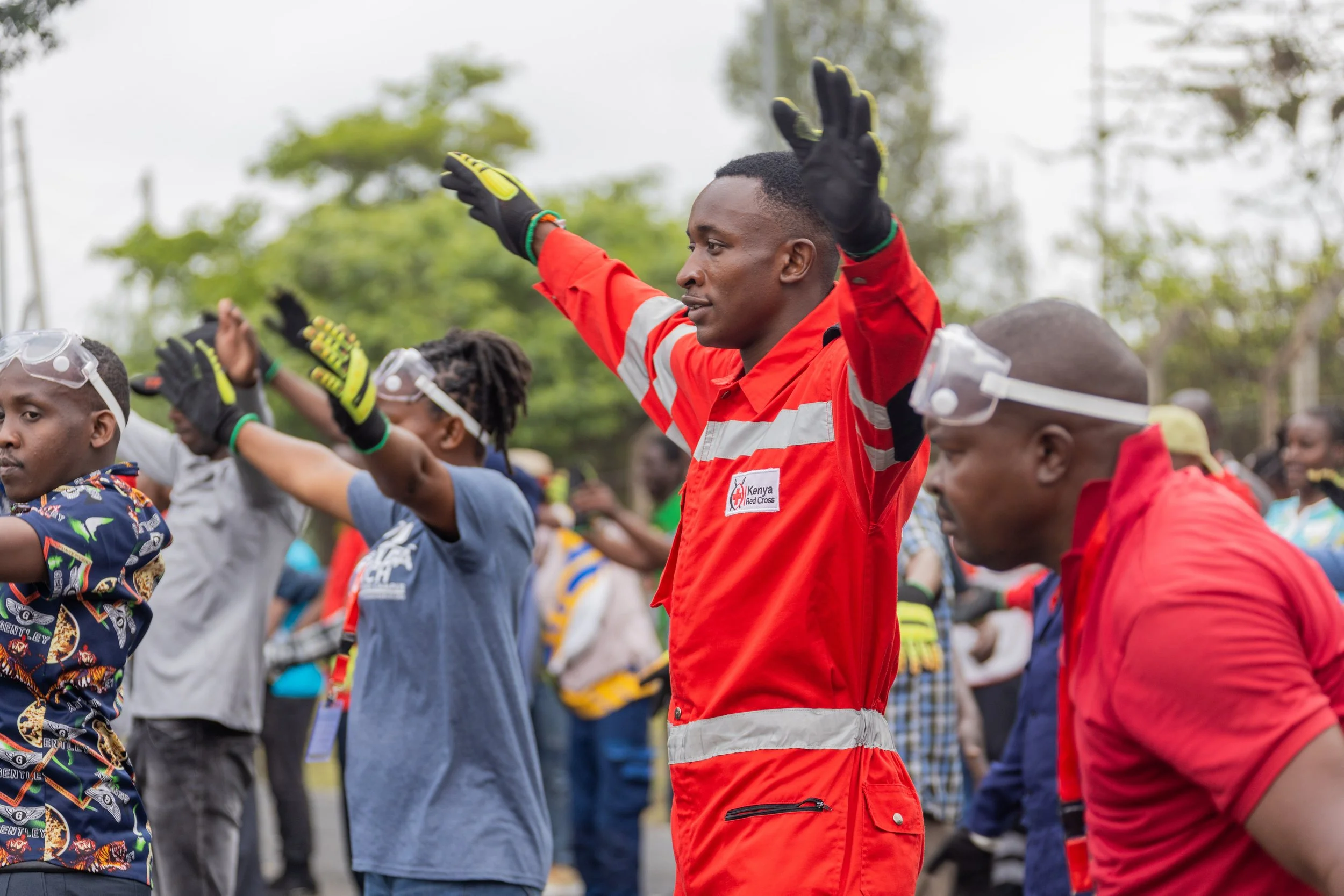
Stretches, running, and other exercises are very important to a regular and beneficial fitness routine.
Maintaining a level of fitness through cardiovascular and strength training exercises has many benefits. Fitness activities will help firefighters develop muscular strength and endurance, allowing effective use of their equipment and more efficiency on incidents. Fitness helps with fatigue and recovery from strenuous work. The improved range of motion, strength, balance, and coordination also helps prevent injuries of firefighters. Additionally, fitness improves cardiovascular and respiratory system performance. Improvements in these areas both improve performance and overall health.
Medical Evaluations:
Routine medical evaluations are another component of firefighter wellness. Cardiovascular disease and occupational cancers continue to be leading causes of firefighter deaths in the United States. Several medical risk factors have been linked to line of duty death and injuries. The recently revised NFPA 1580 standards provide guidance on the areas to be evaluated during your medical exam.
The benefits of routine medical evaluations can be summed up in one word: detection. Early detection of medical conditions such as high blood pressure, high cholesterol, obesity, diabetes, and others will allow for treatment that can positively impact the risks of firefighters suffering a medical related emergency. Firefighters should take action when faced with increased risk factors from these medical conditions. Treatment for these conditions can reduce the impacts on a firefighter health event.
The increased risk of firefighters to cancer has been identified, recognized, and promoted throughout the fire service. Research has been able to link these increases risks to the exposures that firefighters face during their duties. Cancer screenings are encouraged to be included in your medical evaluation. Early detection and treatment have been shown to improve survival while allowing for reduced costs and less invasive procedures.
Behavioral Health:
The impact of the emotional stress that firefighters face is nothing new to those who serve. Many of us have seen our fellow firefighters experience emotional trauma with various impacts to their lives and careers. Suicides amongst first responders have been increasing at an alarming rate now that reporting mechanisms are in place. Research continues to show that ourselves and our colleagues are plagued by post-traumatic stress and the effects of self-coping activities that many choose to use to deal with these stresses.
A critical step in improving behavioral health is the understanding at the individual level and the organizational level that stress reactions to our job duties are normal. Developing a positive culture around the job stress and supporting members that need assistance can help ensure that mental and emotional fitness can be improved. As an organization, developing programs that look to support firefighters who are suffering from stress can be beneficial on the mental well-being of employees. Programs should look to ensure that members have access to specialized services that understand PTSD, firefighter stressors, alcohol and substance treatment, along with the ability to assist members with other areas of their lives that can impact their mental wellness.
Simple steps towards general wellness:
Maintain levels of functional fitness. Stay active, move often, and work to improve strength and endurance. Push yourself a few days a week and get your heart rate up towards your max heart rate.
Find fun activities with your exercise routine. Adding enjoyable activities to your routine will help you stay motivated in your fitness journey and will help your emotional fitness along the way.
Get an annual medical evaluation. Find a doctor or make an appointment with your physician. Tell them about the dangers firefighter face and ask them to include cancer screenings on a regular basis.
If your examination finds something, take action! Early detection leads to early intervention and vastly improves your ability to reduce your risks of injury or death.
Work hard to sleep well. Evaluate your sleep and find ways to sleep and rest better. Improved sleep can reduce stress and reduce risks.
Understand your stress and attack your stressors. Evaluate the stressors in your life and find ways to reduce how much they impact you. Managing your stress will make you a happier and healthier firefighter.
Find resources for your personal medical and mental health. Resources are available to help you overcome almost anything. Find some and use them when needed.
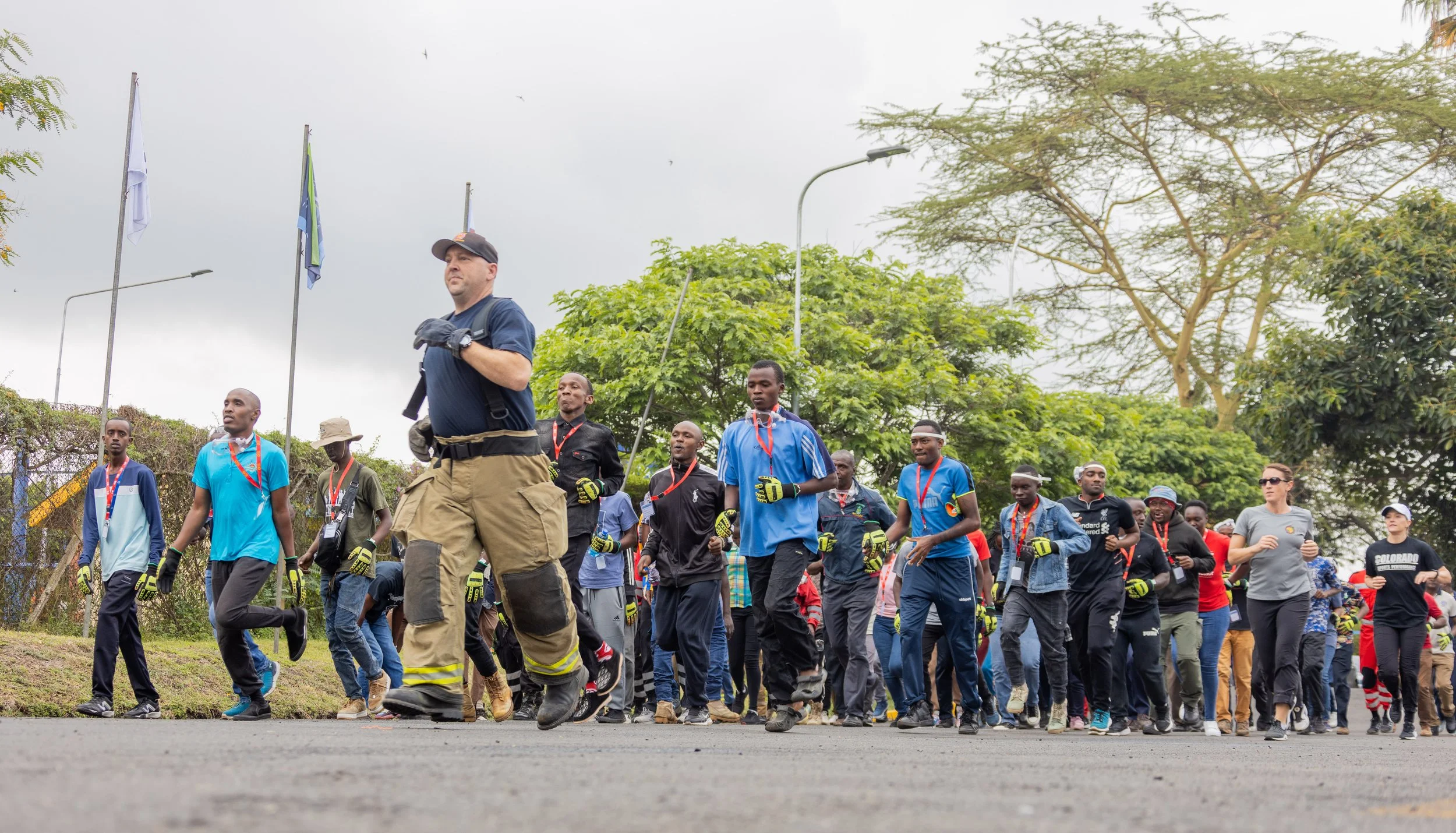
Physical wellness is key to improving your general wellness!
Taking small and simple steps can have big impacts on your personal and professional life. Begin the journey now and start becoming the best version of you.
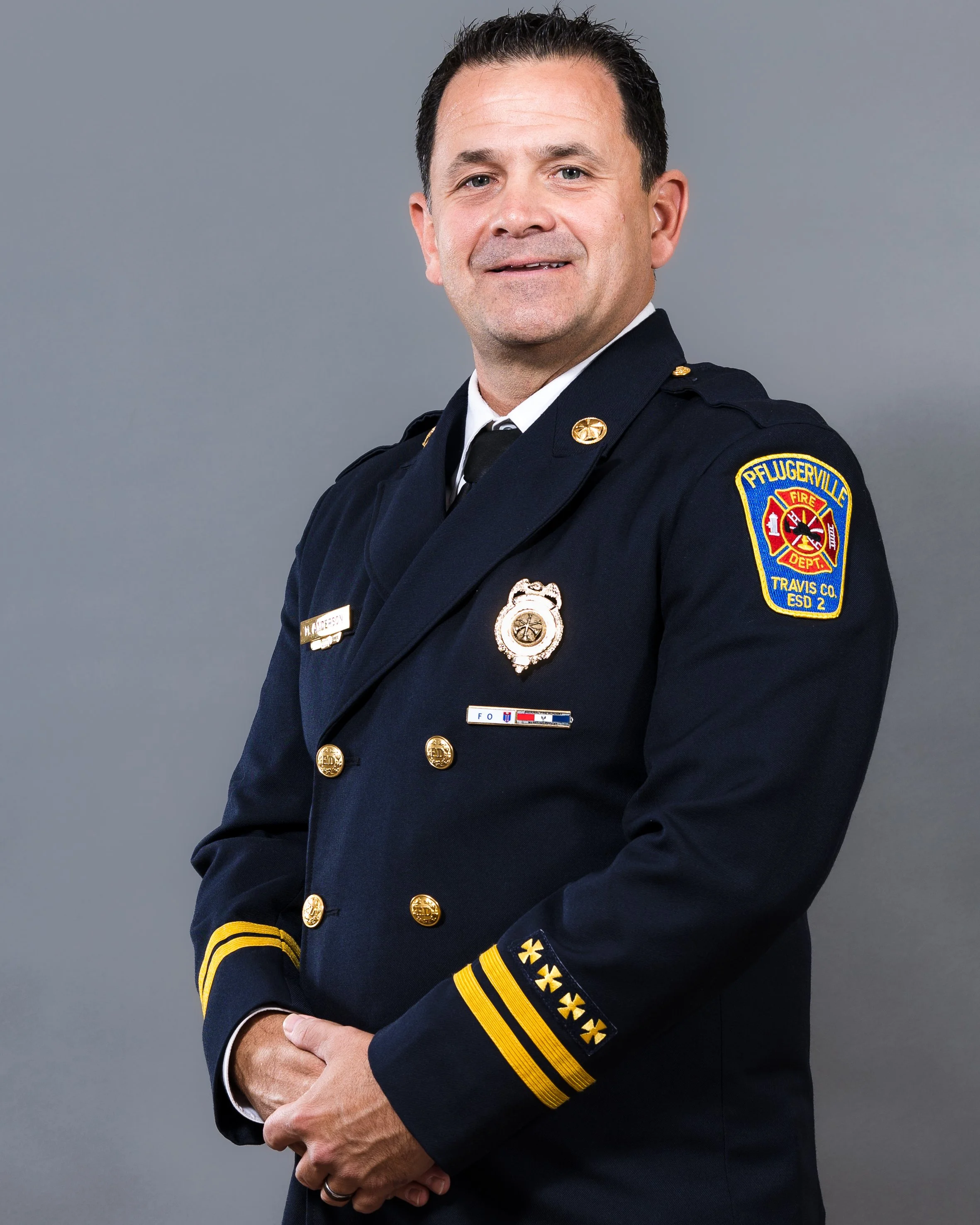
Michael Anderson started in the fire service in 1998 as a volunteer in his rural hometown. He has served at Pflugerville Fire Dept. since 2000, currently holding the rank of Deputy Assistant Chief in Administration. With a passion for firefighter health and safety, Michael spent 14 years involved with the NFFF Everyone Goes Home Advocate Program. He has worked with firefighters and organizations across the United States working to improve the health and safety of firefighters. Chief Anderson also serves as an At-Large Director for the IAFC Safety, Health, and Survival Section.
Chief Anderson completed his undergraduate studies in Applied Arts and Sciences from Texas A&M University-Commerce and earned a master’s degree in Public Affairs from the University of Texas- Rio Grande Valley. Michael holds Fire Officer IV, Instructor III, Incident Safety Officer and Health & Safety Officer Certifications. In 2019, he Graduated the NFA Managing Officer program and achieved designation as a Chief Fire Officer from the CPSE Commission for Professional Credentialing in 2023.
As firefighters, we face numerous visible and hidden threats both on our way to the fireground and after we arrive. It is important for us to develop our situational awareness skills to help us identify the hazards and minimize risks to ourselves and the public. Furthermore, maintaining situational awareness enhances decision-making under pressure and fosters more effective responses in various situations, such as fighting a fire, rescuing a victim, or driving to a fire scene.
The OODA Loop
The OODA Loop, created by Air Force fighter pilot and military strategist John Boyd, is an excellent decision-making framework that consists of four steps: Observe, Orient, Decide, and Act.
- Observe: This step focuses on what is commonly called situational awareness. It involves making and recording observations.
- Orient: Observations are placed in context to understand the overall situation.
- Decide: Take the results of the orientation and observation steps and formulate the optimal course of action.
- Act: Execute on your decision without delay
The OODA loop helps us remain calm and relaxed during stressful situations, reducing tension and stress and improving everyone's ability to perform their tasks. It is also very helpful for preventing tunnel vision, one of the most dangerous pitfalls on the foreground. Tunnel vision occurs when stress and nerves narrow our focus, causing us to concentrate only on what is immediately in front of us. This lack of peripheral awareness can be deadly.
It is important to develop the habit of instinctively using the OODA loop. Practice it around the firehouse and even at minor calls. As you develop your observation skills, learn to use more than your sight. Paying attention to sounds and smells can teach us crucial fire information.
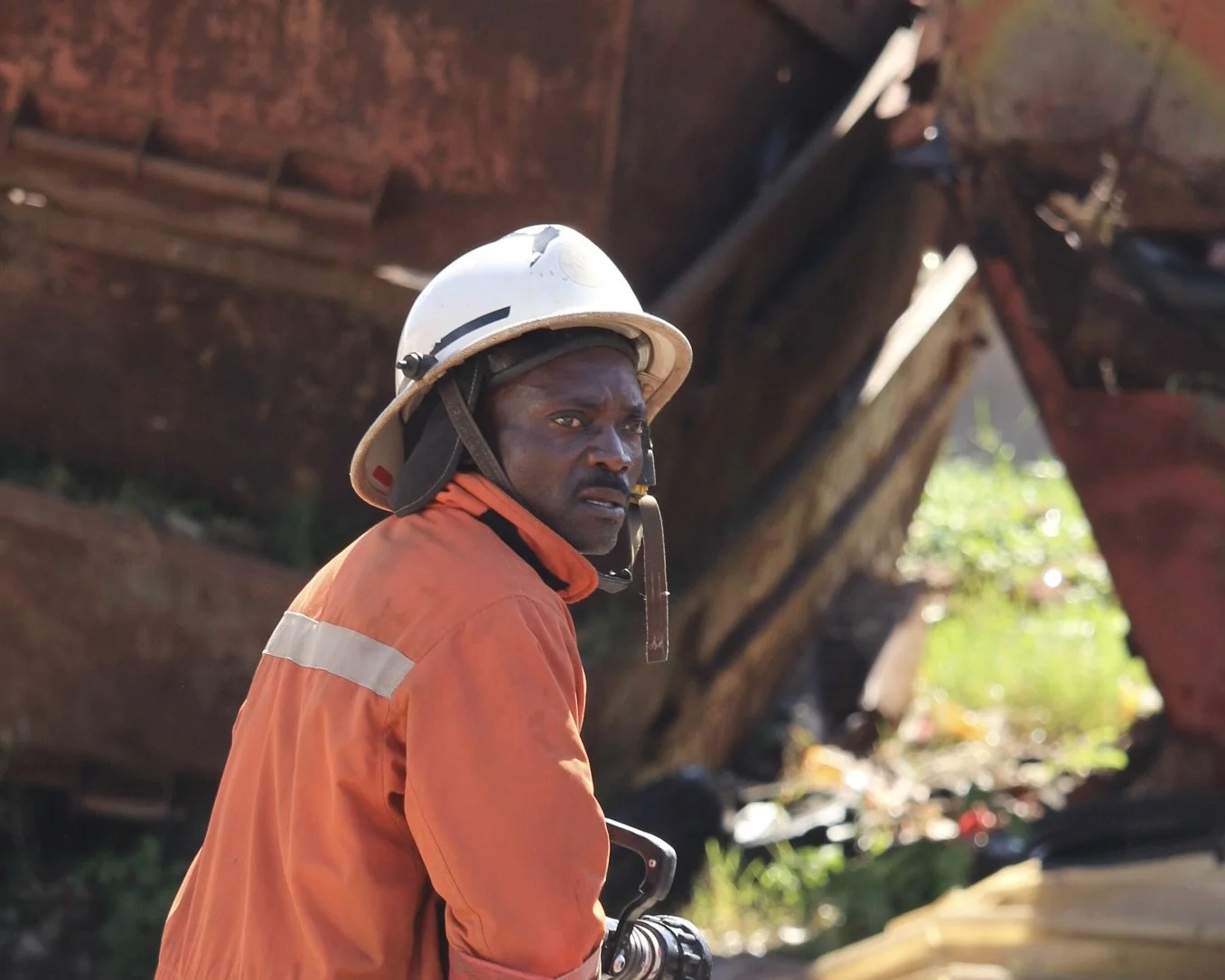
A firefighter checks his surroundings while training with a firehose.
Communication
Another important situational tool is communication. It is critical that we maintain constant communication with our team on the fireground. We need to inform our commanders and officers of our planned actions. For instance, if a window needs to be broken for ventilation, we must communicate this so that team members below can be aware of any falling glass.
Situational awareness is critical for first responders. We often must make quick decisions in high-pressure, high-stakes environments. By enhancing our situational awareness, we can make more informed decisions that help us stay alert and safe on the fireground.
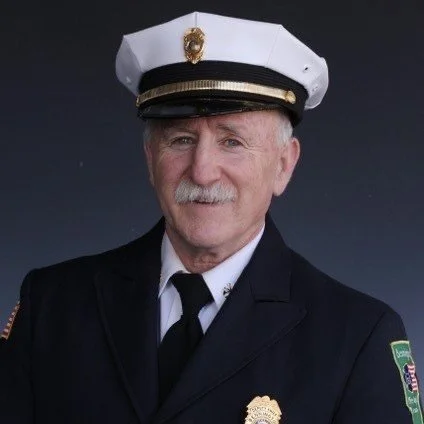
Howard A. Cohen was a volunteer firefighter for 20 years. He began his firefighting career as a chaplain and retired as the deputy chief. He is currently AFM’s online program content director. He frequently presents for the Wednesday Webinars and contributes to the AFM blog.
by Howard Cohen
Not all firefighters are emergency medical technicians or paramedics, but we often serve as the first responders at scenes requiring life-saving first aid. Therefore, it is vital for all firefighters to possess at least a basic understanding of first aid. This short article aims to outline foundational principles for addressing trauma in situations where immediate life-saving medical assistance is needed. This article should not be seen as comprehensive first aid training. Nevertheless, with the basic and limited information provided here, and without any formal training, you may still have the opportunity to save someone’s life.
Scene Survey: The First Task
Size up: Regardless of your level of technical first aid training or medical knowledge, your first task when responding to an incident involving injuries is to gather as much information as possible about the situation. This is achieved through a thorough size up. It is crucial to assess the risks and dangers before rushing in to provide aid. Ask yourself, “What is trying to kill or harm me?” Is it traffic, wildlife, fire, an unstable building, falling objects, or floodwaters? You do not want to become another casualty or cause further harm to the patient.
Number of patients: Once you’ve ensured the scene is safe and stable, it’s time to determine how many individuals are involved in the incident. It’s easy to focus on patients who are crying out in pain and overlook those who are unconscious or not visible. Additionally, it can be tempting to rush to assist a person whose injuries seem more life-threatening than they actually are, such as someone bleeding from a superficial head injury, while another individual nearby has stopped breathing.
Primary Survey: The Second Task
The primary survey is an assessment of the three essential life-supporting functions: the respiratory, circulatory, and nervous systems, often called the ABCDs. Any problems related to these systems present an immediate risk to the patient's life and must be addressed without delay.
ABCDs: Once the size-up is completed, the scene is safe (or as safe as you can make it), and you have a sense of the number of patients needing aid, initiate a primary survey of the patients by checking the status of the three conditions that represent an immediate threat to life.
Airway: Check to make sure that the mouth and airway are cleared and that air is actually going in and out.
Blood is circulating: Ensure that blood is not spilling out and that it is actively circulating.
Disabled: Check whether the spine is stable and the central nervous system is functioning normally. Due to the limited scope of this article, I will not discuss further injuries related to the head, neck, or spine.
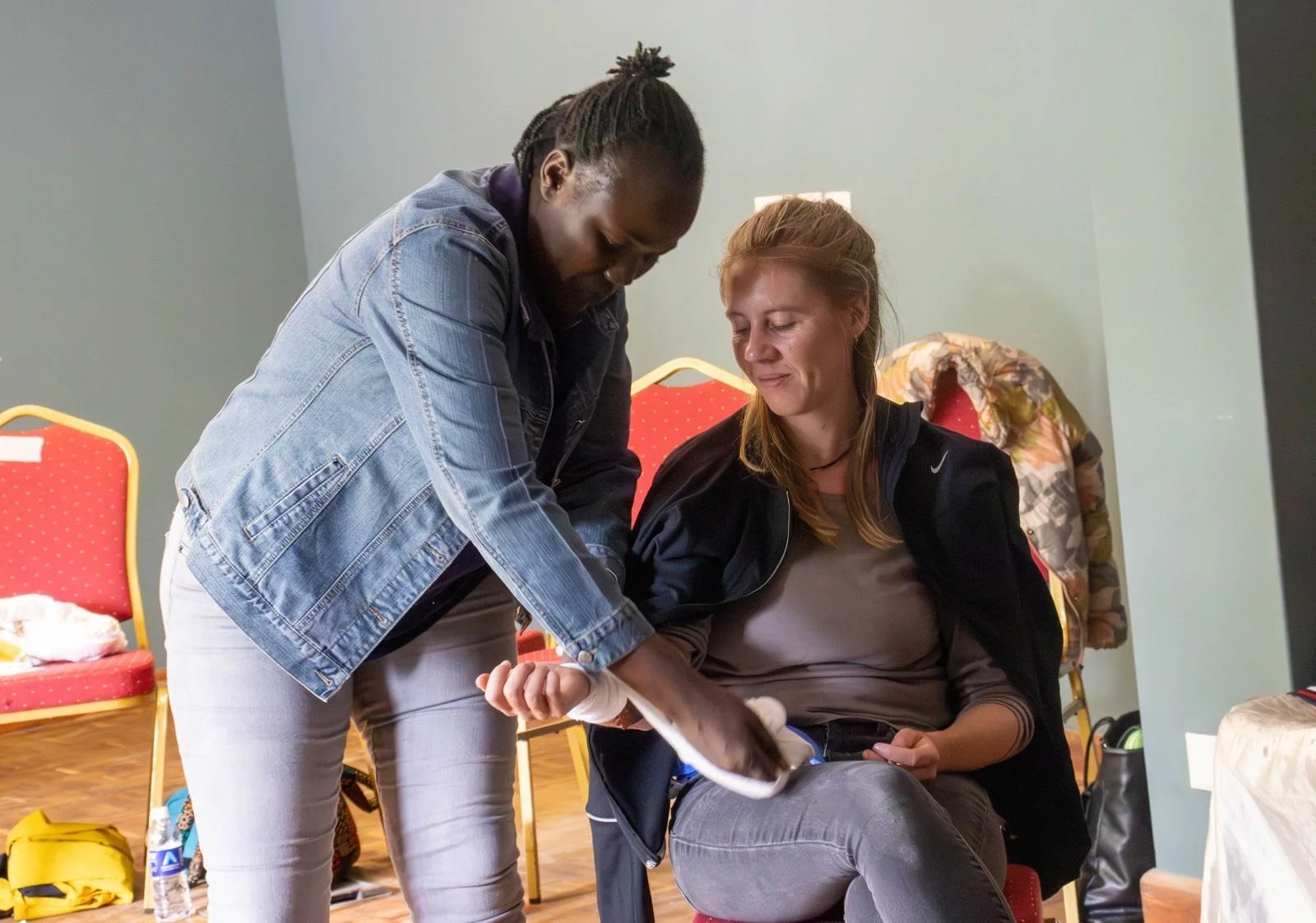
Active Bleeding Control Instructor checks the pulse and applies bandages to a patient.
Basic Life Support (BLS)
Basic life support (BLS) is the immediate treatment of one of the three life-threatening emergencies found during your primary survey. Its purpose is to provide temporary support to keep the patient alive while a secondary survey is conducted and/or until advanced treatment is available.
The simplest way to begin a primary survey is to ask the patient, “How are you?” If he answers, you know that his airway is not obstructed (A), his heart is beating (B & C), and his brain is functioning (D). If the patient does not respond or responds in an unusual way, you will need to look more closely.
Airway:
Airway problems result from an obstruction to the pharynx or larynx, which can be complete or partial. A complete obstruction is rapidly fatal, but it can be effectively and dramatically treated by clearing the airway. There are various ways an airway can become obstructed, such as vomit, a foreign object, swelling caused by trauma, an irritant, or an allergic reaction. It is imperative that you clear the airway, but you must do so without causing any additional harm to the patient.
Breathing:
A person can have an open airway yet still experience difficulty breathing. This may result from an injury to the brain, spinal cord, or diaphragm. The method for assisting a patient with breathing when more advanced medical care is unavailable is known as positive pressure ventilation or artificial respiration (mouth-to-mouth). The inflation rate should be around 12 breaths per minute or one every 5 seconds, with each breath lasting about 1 to 1.5 seconds. Rapid breaths can push air into the stomach, potentially leading to vomiting.
Bleeding & Circulation:
Uninterrupted blood circulation is essential for survival. There are two primary types of disruptions to blood circulation that a first responder can address: cardiac arrest and bleeding. Cardiac arrest occurs when the heart stops beating. During your primary survey, if you discover that the patient has no pulse, it indicates that her heart has stopped beating, and she is in cardiac arrest. It's important to note that in adverse situations, or if the patient is in shock, finding a pulse can be challenging. The carotid pulse is the strongest and easiest to access; it is located on either side of the larynx in the neck. If there is no carotid pulse, the heart is not beating. CPR (cardiopulmonary resuscitation) is the only treatment for cardiac arrest. Even with hands-on training, it has limited potential to restore and sustain life.
The second type of disruption to circulation results from significant blood loss. Controlling blood loss is essential as part of BLS. Bleeding can be internal, which is often difficult to identify and stop, or external, though it may not always be obvious. Addressing internal bleeding goes beyond the scope of this article and the capabilities of most first responders in the field. External bleeding is managed by applying direct pressure to the bleeding site with your hand, ideally using a cloth or bandage. This application is not intended to absorb the blood; instead, it provides uniform pressure across the wound. Prepare to maintain direct pressure for ten minutes or more. If the bleeding does not stop, remove the bandage to locate the source of the blood and then reposition your hand.
There is no easy rule for determining when bleeding is severe. A rule of thumb is that if it looks like a lot of blood, it probably is. However, severe bleeding can be missed if the patient is wearing a lot of clothing or the blood is absorbed into the ground around the patient.
Conclusion:
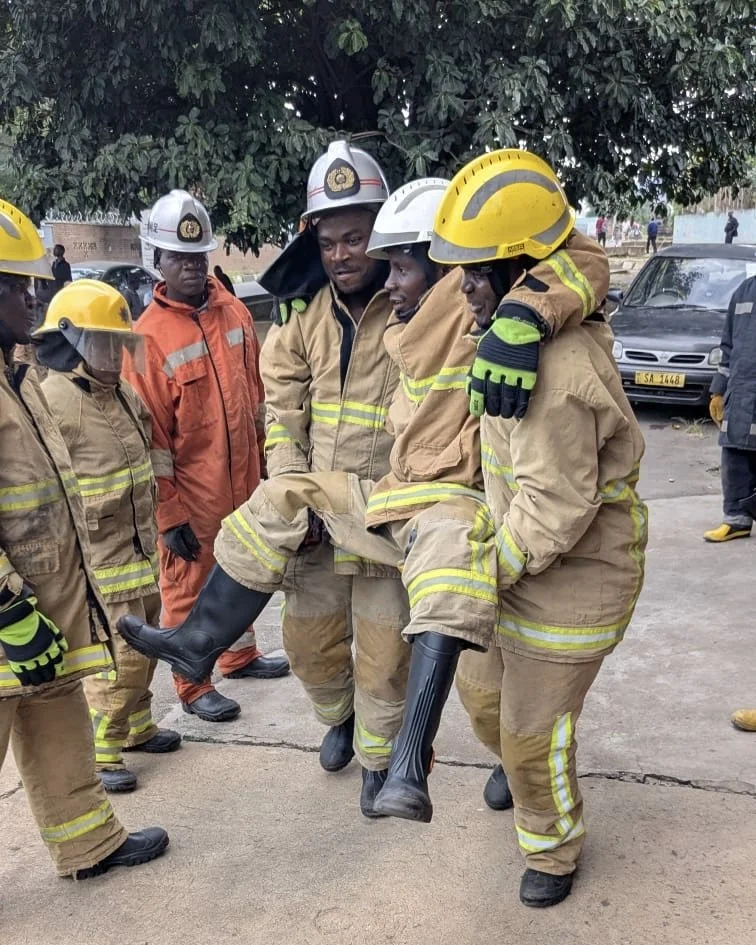
Firefighters practice safely transporting an injured person.
When developing first aid skills, like all skills a firefighter must master, training and practice are essential. Additionally, reading about the principles and theories that support these skills is important. However, there is no substitute for training and practice.
For more information, visit the following references:
Africa Fire Mission Active Bleeding Control Resources
The Outward Bound Wilderness First-Aid Handbook; Jeff Isaac & Peter Goth.
The Field Guide of Wilderness & Rescue Medicine; Jim Morrissey & David Johnson.
Opening an Unconscious Patient’s Airway with a Manual Manipulation
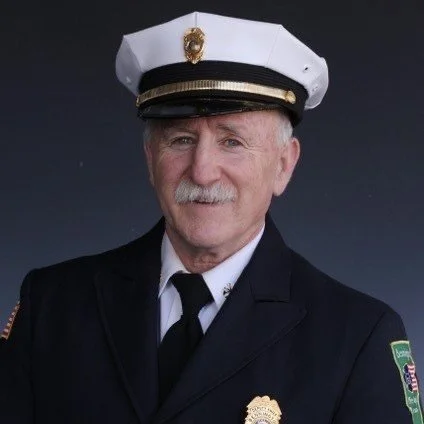
Howard A. Cohen was a volunteer firefighter for 20 years. He began his firefighting career as a chaplain and retired as the deputy chief. He is currently AFM’s online program content director. He frequently presents for the Weekly Virtual Firefighter Trainings and contributes to the AFM blog.
Because of LION’s renewed and ongoing commitment to our programs, AFM is pleased to announce that we now have a second team member to work full-time in Africa! Errol Sianga is our newest team member. Based in Kenya, Errol has worked in communities and made a difference over the years as a Fire Safety Advocate Volunteer. He is well equipped to provide hands-on instruction and assist AFM with training, empowering, supporting, and encouraging communities across Africa.
by Brad Fiore
Just like any other fire, there are two main strategies in fighting bush fires: Direct and indirect. Topography, fuel types, and resources may vary between the US and Africa, but the basic tactics are the same. In a direct attack, we remove either the oxygen or the heat, and in an indirect attack, we remove the fuel.
The best tool we have for fire extinguishment is water. Unfortunately, a lot of times, the fire is in an area that makes it difficult to get water to. Hand tools play a significant role in fighting bush fires. The basic types are cutting, digging, scraping, and smothering tools.
In a direct attack removing the oxygen is accomplished by smothering the fire. We can throw dirt on the burning material or pat small flames out with our tool. I’ve seen fire flappers used to beat the flames of large bushes. I am not familiar with how well this works, but from another point of view, in North America, our flappers are smaller, and we use them on small creeping fires. The technique is to drag the flapper over the burning material, maybe using a slight patting motion. Beating a fire uses a lot of energy in one concentrated area. It also seems that embers are kicked up into the air, which could start a spot fire. Other tools, such as hoes and fire rakes, can all be used to pat out small flames.

Smoke coming from trees can be a sign of a potential bush fire.
When you use water to remove the heat, use it sparingly and wisely. Always walk in line with the fire, spraying water along the fire edge. This will make your water work smarter. Any water that bounces will bounce into the flames ahead. If you stand perpendicular to the fire, the overspray and bounce will fall into the already burned area, wasting that water. It doesn’t take a lot of water to douse the flames, so attaching a low-volume nozzle to your hose will extend your water.
The indirect attack is more labor intensive, but provides a safer environment for the firefighters. The indirect attack is the process of cutting a fire line around the fire. You and your team will be cutting and scraping away the fuel so that when the fire reaches the fire line, there is nothing there to burn.
Tools for this are anything you can use to cut through the ground material and dig down to the soil. Hoes and rakes made for this are great, but a garden hoe that is sharpened will do the trick. That shovel we used before to throw dirt on the fire, hold it parallel to the ground, and you now have a scraping tool. Chainsaws work wonders, but a hand saw, and a pair of loppers will handle small bushes and brush. A hatchet or fire axe can help clear small trees.
Your goal is to get down to mineral soil, and the width of the line needs to be one and one-half the height of the fuels. If you are cutting in grass that is a foot and a half tall, you need to make a line that is 3 feet wide. Always start and end at an anchor point. A road, trail, open dirt area, or body of water. The best practice for cutting the line is to space your crew a few feet apart so that swinging tools do not hit a team member. Each member will take a swipe and move forward along the line. As the team moves, each member is clearing more along the line.
Once the line is cut, and if you have time, you can backburn. This intentionally burns the material between your fire line and the main fire. The main fire will be intense and may make its own weather, causing high winds. Lighting a fire ahead of this will make the fire small and manageable. It will grow as it gets closer to the main fire, but at this point, it is within your control lines.
Anytime you are fighting bush fires, always have escape routes planned and made known by all members fighting the fire.
From my experience teaching a couple of the virtual classes for AFM, I have come to find out that you, like most firefighters, are extremely inventive. With the knowledge all the instructors provide, you find ways to make the resources you do have work. That’s what firefighting is.
Be safe!
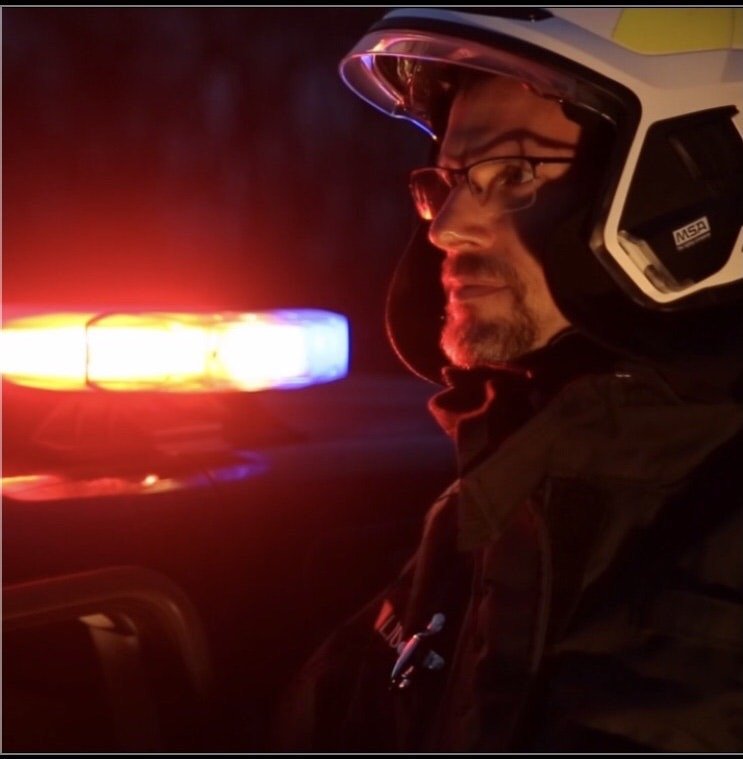
Brad Fiore is a volunteer firefighter of Cottekill Volunteer Fire Company and former Fire Chief. He also has experience as a 911 dispatch supervisor. Brad has served as an instructor for AFM’s virtual firefighter trainings.
by F. R. Montes de Oca
Leading a team can be frustrating and often stressful, but at the same time very rewarding. As a student of leadership, these are several leadership tips that I’ve learned over the years. These will help guide you on your leadership journey.
Demonstrate consistency in all you do. Be consistent in the way you handle challenges, successes, and failures. Those who work for you and with you depend on your measured, predictable demeanor. Before making a hasty decision, think of the outcome and consequences.
Be trustworthy. Personal trust is like a bank account. It may take you time to build trust with someone but lie or do something deceitful and their trust in you rapidly drops.

Leaders stay resilient during moments of hardship.
During the darkest moments, resiliency can help one to survive and thrive. As a leader, you will experience tragedy, failure, and disappointment. The need to be resilient is most critical during times of tragedy such as the loss of a department member or the after-effects of mass violence. If you choose to lead, a deep reservoir of resilience will help in your survival and success.
Practice humility. Successful leaders know when to show a little humility – especially when it allows the team to share in the limelight.
A little confidence goes a long way. Working in a profession that recruits and trains strong-willed men and women, leaders are surrounded by extremely self-confident team members. During operations when life-and-death decisions are necessary for one’s survival, confidence is often key to a positive outcome. However, there are times when confidence can be mistaken for arrogance. A fine balance of confidence and humility is always helpful… and respected.
Always practice honesty. Enjoy your accomplishments and leadership position. And within the role of your duties and interactions… be honest in all you do. In doing so, your influence builds other honest leaders.

Great leaders are great communicators. Practice communicating in your community!
Communicate every chance you get. The key to success as a leader is communicating to those who follow you and to those you follow. Make every effort to keep everyone on the same page so your team operates as a solid unit.
The moral of this story? 1) Learn from everyone. 2) Lead with your head and your heart. 3) Never demand more than you are willing to give.
Frank Montes de Oca served as a firefighter/paramedic for over 38 years attaining positions as Chief of EMS, Training Bureau Commander, and Chief of Department. He remains engaged in managing and developing firefighter safety programs and mentoring leaders.
In November, Africa Fire Mission worked with partners and collaborators around the world to hold the 2024 Kenya EMS and Fire Symposium and Competition. This Symposium featured firefighter and EMS trainings, leadership development, mental health awareness, community fire prevention trainings, and the signature EMS and Fire Competition. All of the classes were desinged to have immediate application for firefighters and EMS personel. AFM was espeically focused on leadership development in emergency services and the mental, physical, and spiritual wellness of first responders. AFM would like to recognize members of the fire service who are making a difference across Africa, as well as the award winners of the Fire and EMS Competition!
Growing Community Fire Prevention Programs - AFM’s first annual Fire Prevention Competition!
January 1, 2023
by: Nancy L. Moore, Executive Director
When my husband, Dave, and I arrived in Nairobi, Kenya in 2012 we immediately began to see the dangers of fires that are a reality of life in Africa. When we learned in 2014 that many firefighters in Zambia didn’t know the basics of fire prevention and fire safety we knew we had to do something.
From our partners at Missions of Hope International and CMF International we learned about Community Health Evangelism or Community Health Education and realized that there was very little education for developing communities on fire prevention and fire safety. So we worked together with firefighters in Africa, community members in Kenya and AFM’s American firefighter volunteers to develop a curriculum that would be culturally appropriate for developing communities.
We have trained thousands of firefighters and community volunteers in using our curriculum and have been able to track results as fire services in Africa report that communities that have received training call the fire brigade sooner in cases of fire outbreaks and that they have a better understanding of how the fire service works and what firefighters need from the community in order to do their job. In 2022, firefighters and community volunteers reported more than 520,000 people were educated in fire prevention and fire safety through training activities, community walks and fire prevention week activities. Through public television and radio more than 13 million people were received life saving fire safety education.
With more than 1 billion people in Sub-Saharan Africa - there are many more people to reach with these important life safety lessons.
In 2023 AFM has launched an initiative to reach more people by encouraging training and reporting that training through our first annual Fire Prevention Competition. We will have 4 categories for participation:
Individual Volunteer - someone who is not paid for trainings that they are providing.
Individual Paid - someone doing this as a part of their job, in the fire service, private or public sector.
Fire Brigade (paid firefighters this could be a recognition for the whole fire department what they submit across all shifts, etc).
Groups- organization or informal group (this could be firefighters or community members that are not getting paid to do the trainings and are doing it on their own time)
Trainings reported and taking place from November 20, 2022- November 1, 2023 will be considered. For the competition, trainings must take place in Africa. Participants in the competition may use the Africa Fire Mission curriculum as a guide for what training content to include: https://www.africafiremission.org/fire-safety-curriculum
The requirements to be considered include:
Submit training documentation to Africa Fire Mission via this form: https://www.africafiremission.org/fire-safety-training-reporting
Submit pictures of the training to info@africafiremission.org
Submission reviews to determine winners of the competition:
Africa Fire Mission will review the all of the submitted training reports for quality of training as well as number of persons trained.
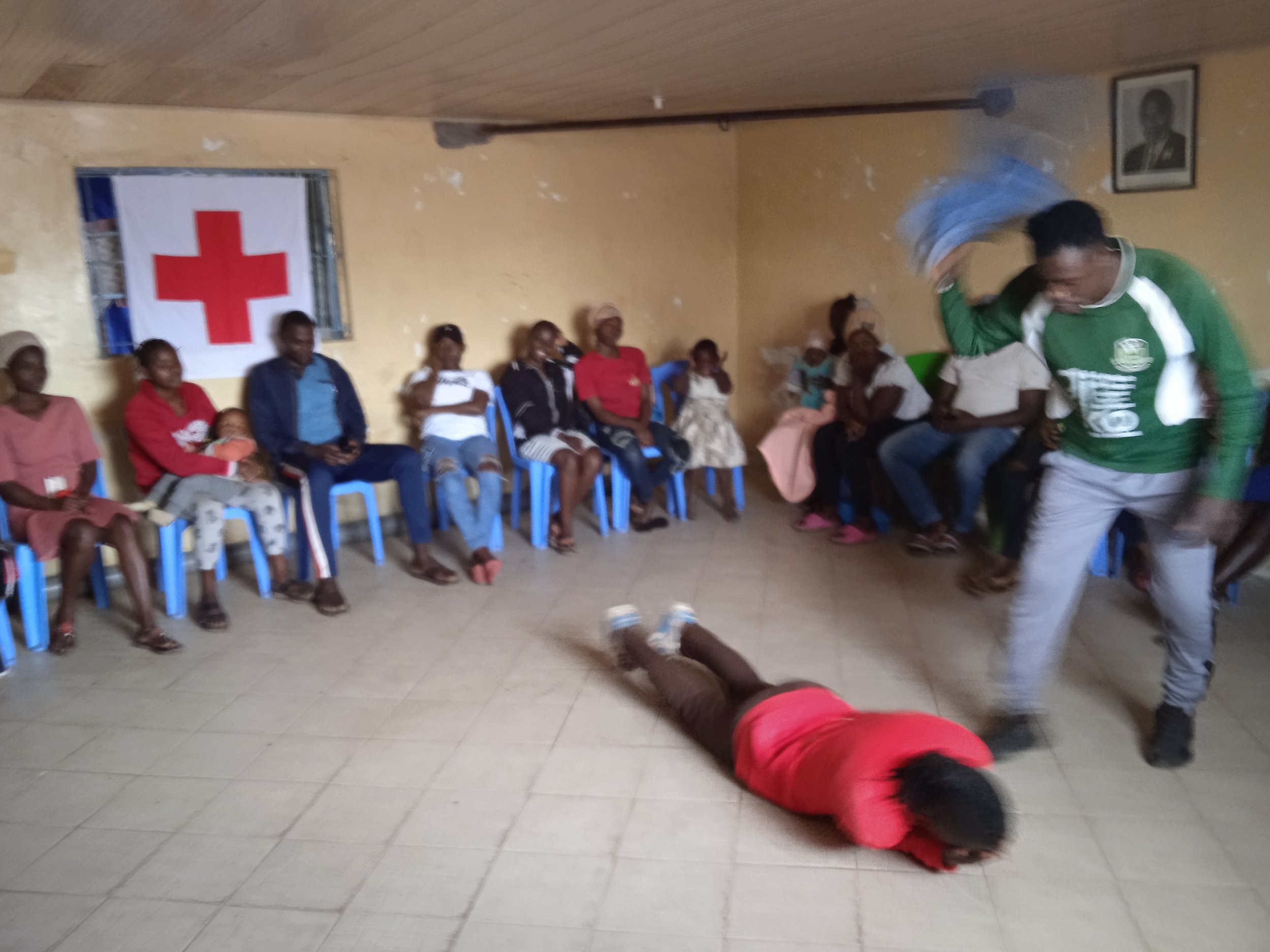
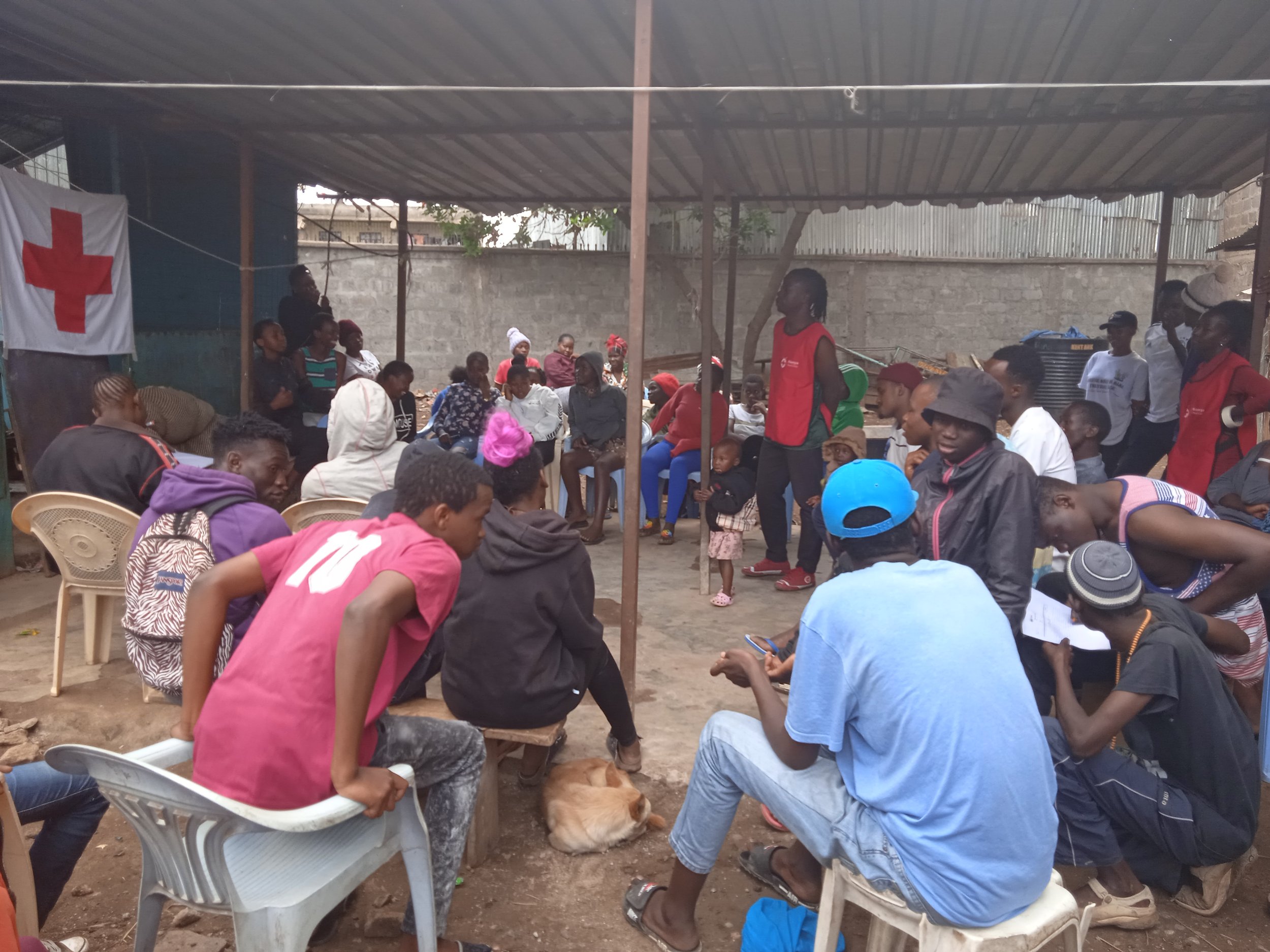
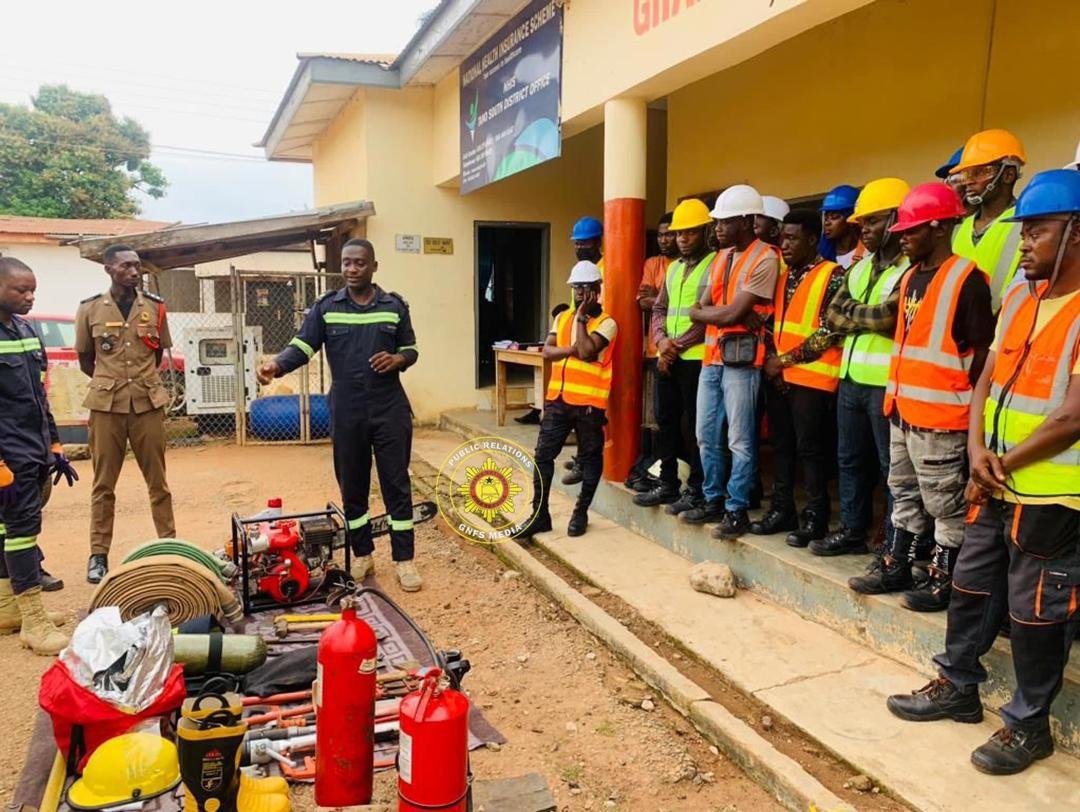
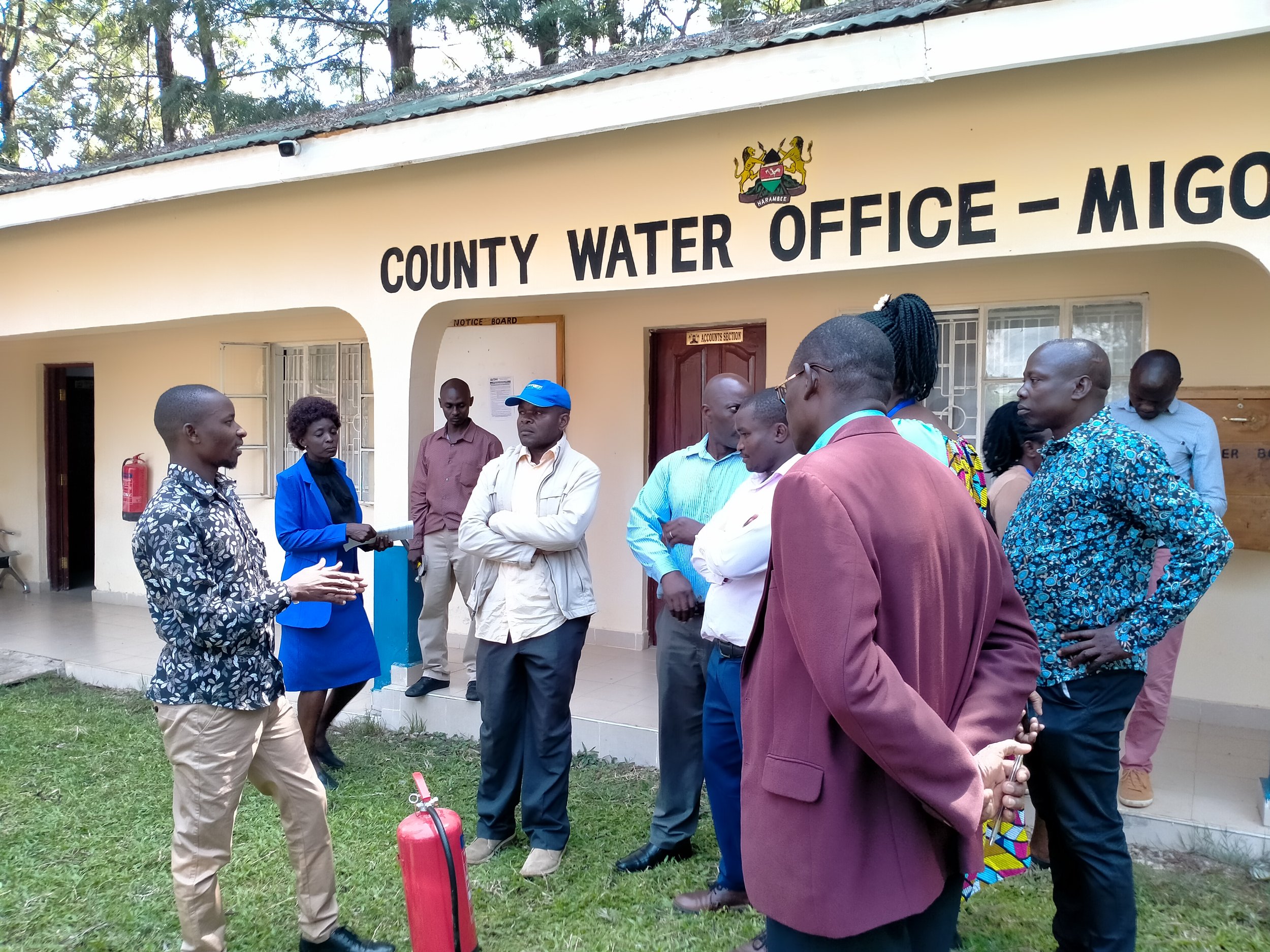
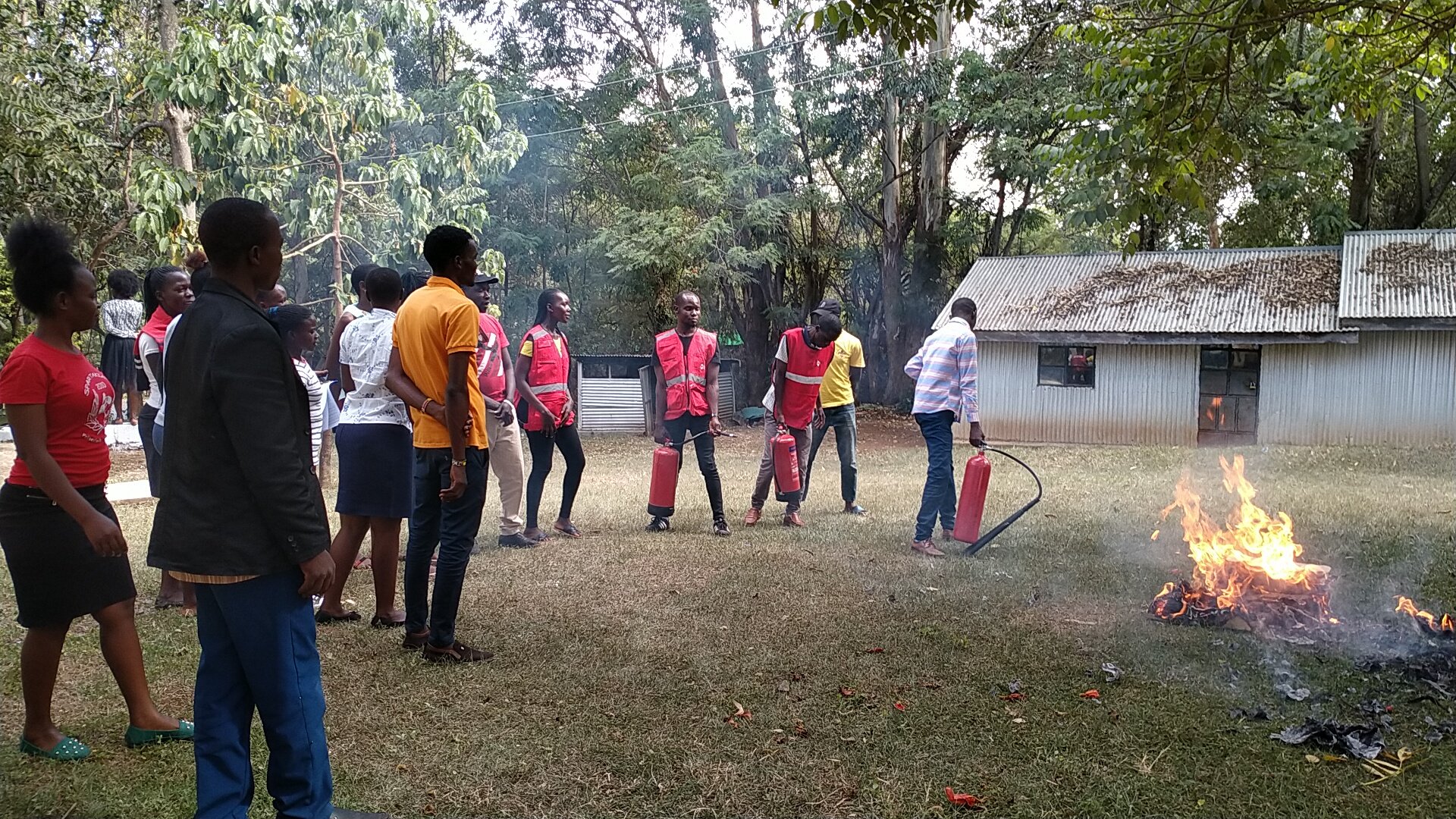
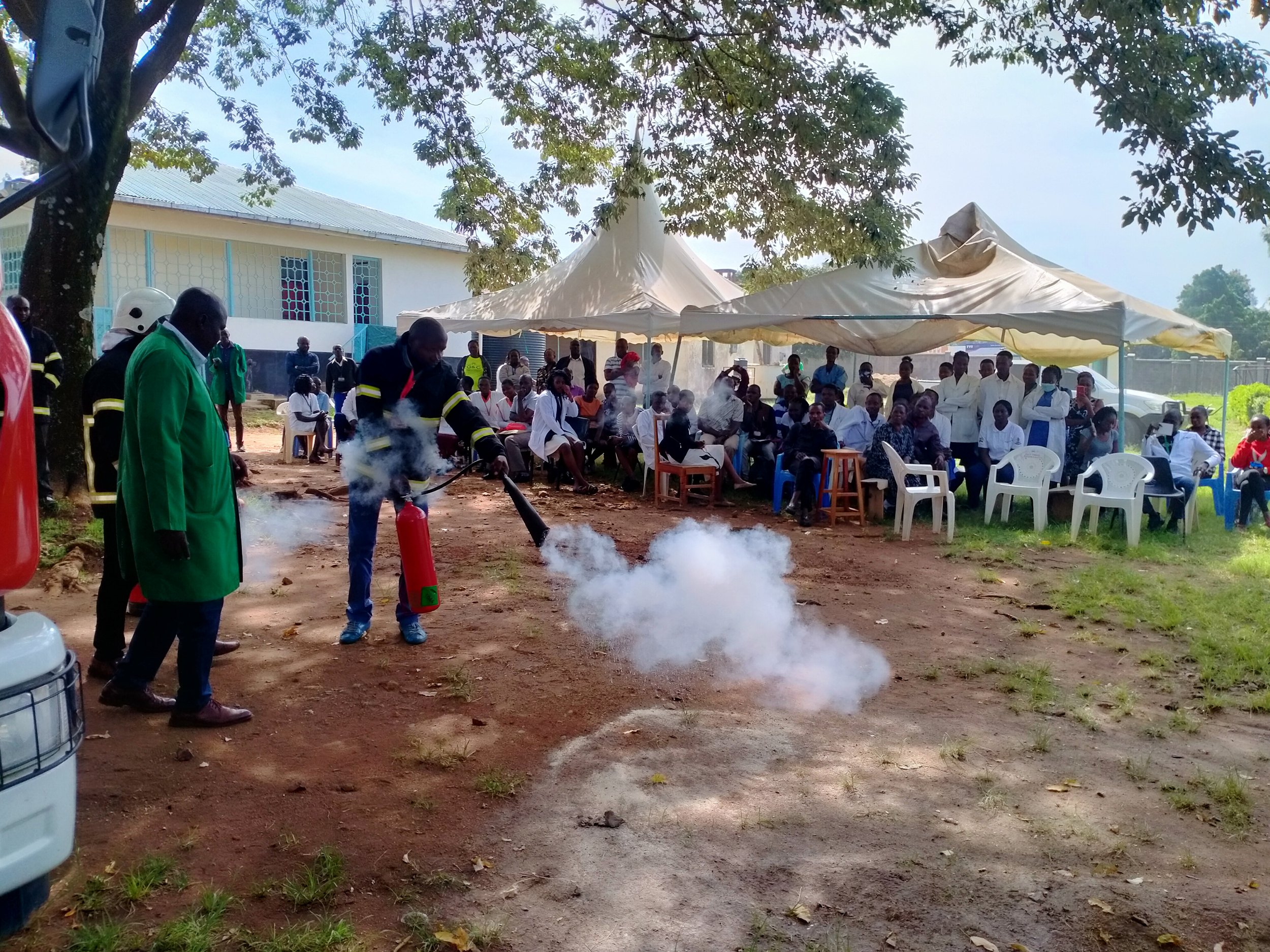
Training photos will also be reviewed and AFM should be able to tell what content is being taught through the photos evidence.
Trainings may be done formally (for instance a classroom setting or community gathering) or informally community walk, media interviews)
Winners will be announced at the closing of the Kenya Fire EMS Symposium and Competition 2023, in Nairobi, Kenya, November 2023. Winners will also receive recognition on AFM social media and AFM’s monthly newsletter. A certificate will be issued to the winners as well as a gift (yet to be determined).


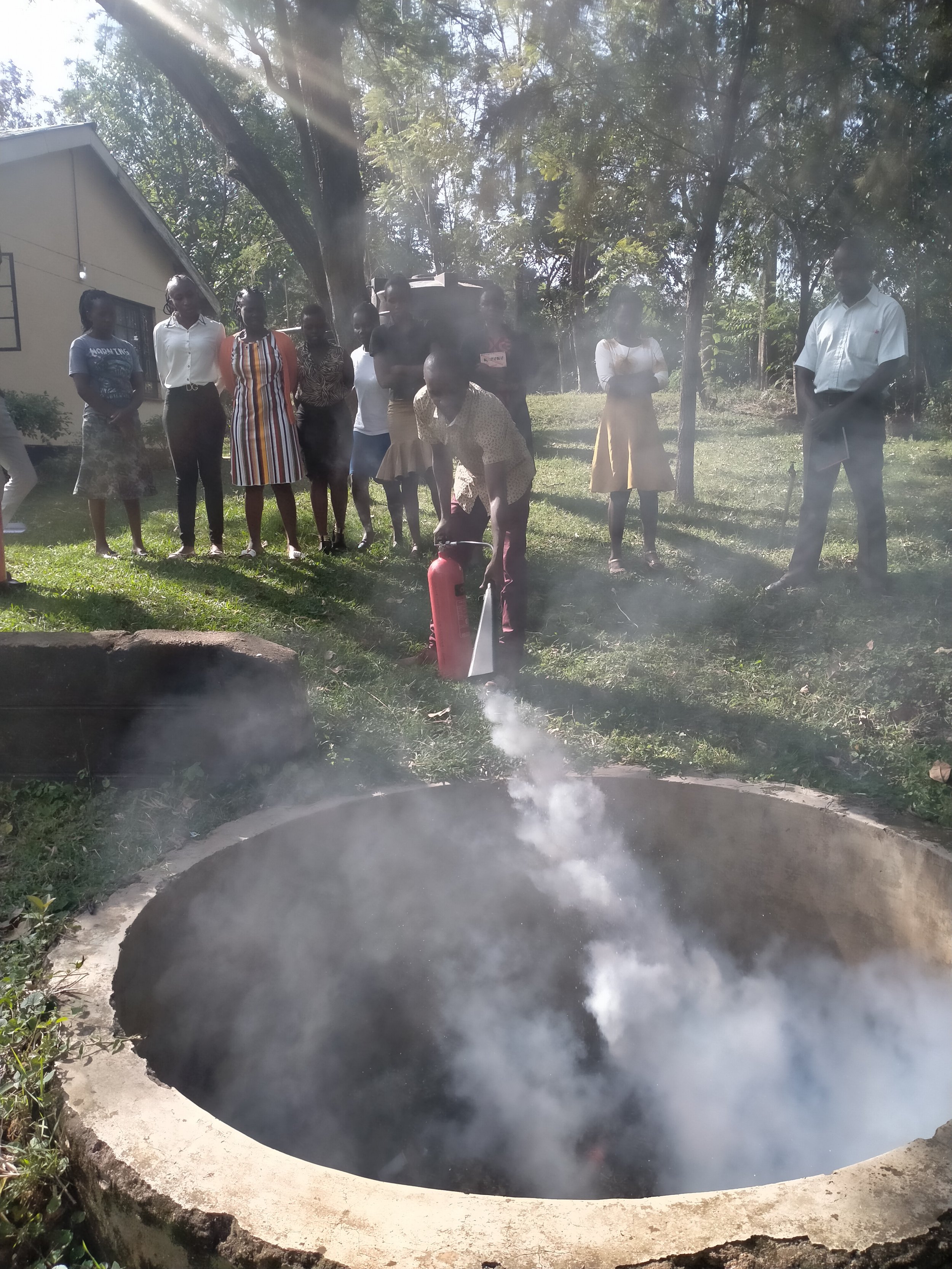

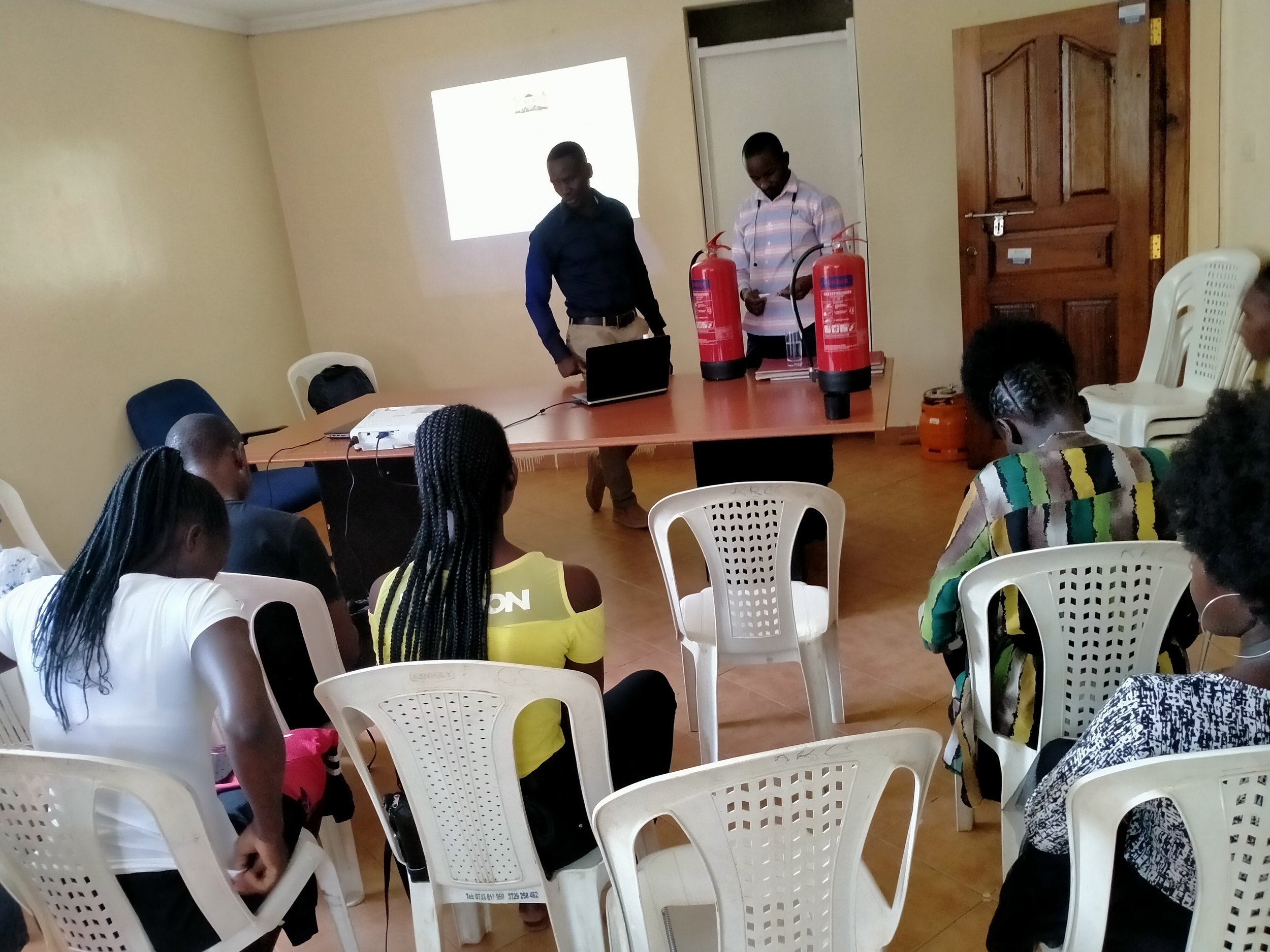
Please note: Individuals training together are considered a group, please have one person from the group submit the reports and list the name of the group with the training report. Duplicate trainings will be combined as one training report. If there are participants from multiple countries, awards may be issued by country. AFM staff will not be considered as part of the competition. AFM holds the full decision making over the winners of the competition.
When Dave and Nancy , Co-Founders of Africa Fire Mission, went to Kenya in November 2012. One of the things that surprised them was the lack of knowledge around fire prevention and fire safety. In the US, children start to learn about fire safety in Pre-School and fire prevention messages and what to do in case of fire are integrated into school and work for many Americans. In most of Africa we have learned that there is very little education around fire prevention or fire safety.

As soon as Dave saw the gap he invited the Nairobi Fire Service to come to Missions of Hope International (AFM’s first partner) to teach the teachers a little about fire prevention. Stop, Drop and Roll, Crawling Under Smoke (Get Low and Get Out), how to call the fire department and how to use a fire extinguisher were among the first lessons taught. That first fire prevention session in Nairobi had about 30 participants - since then AFM has been growing our fire prevention program through curriculum and a train the trainer model through CHE (Community Health Education).
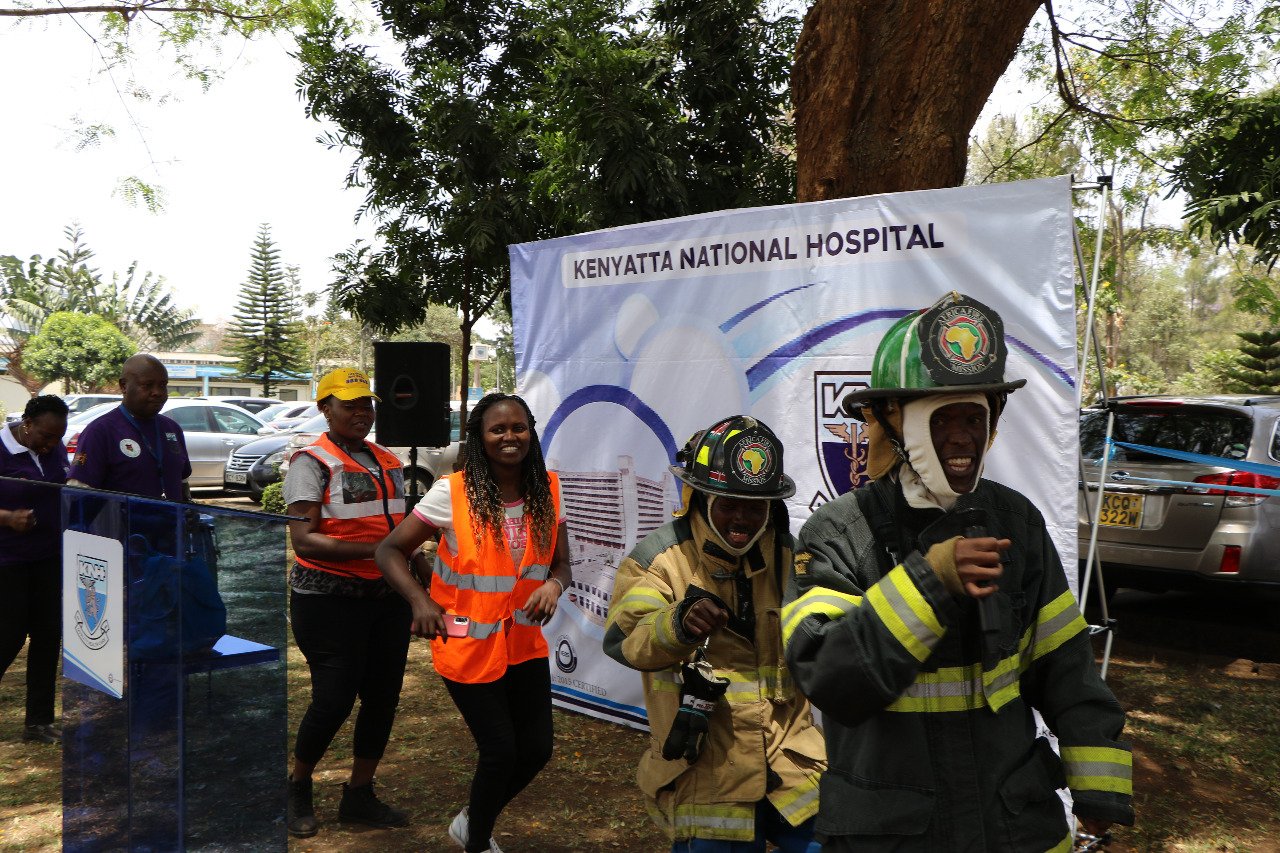
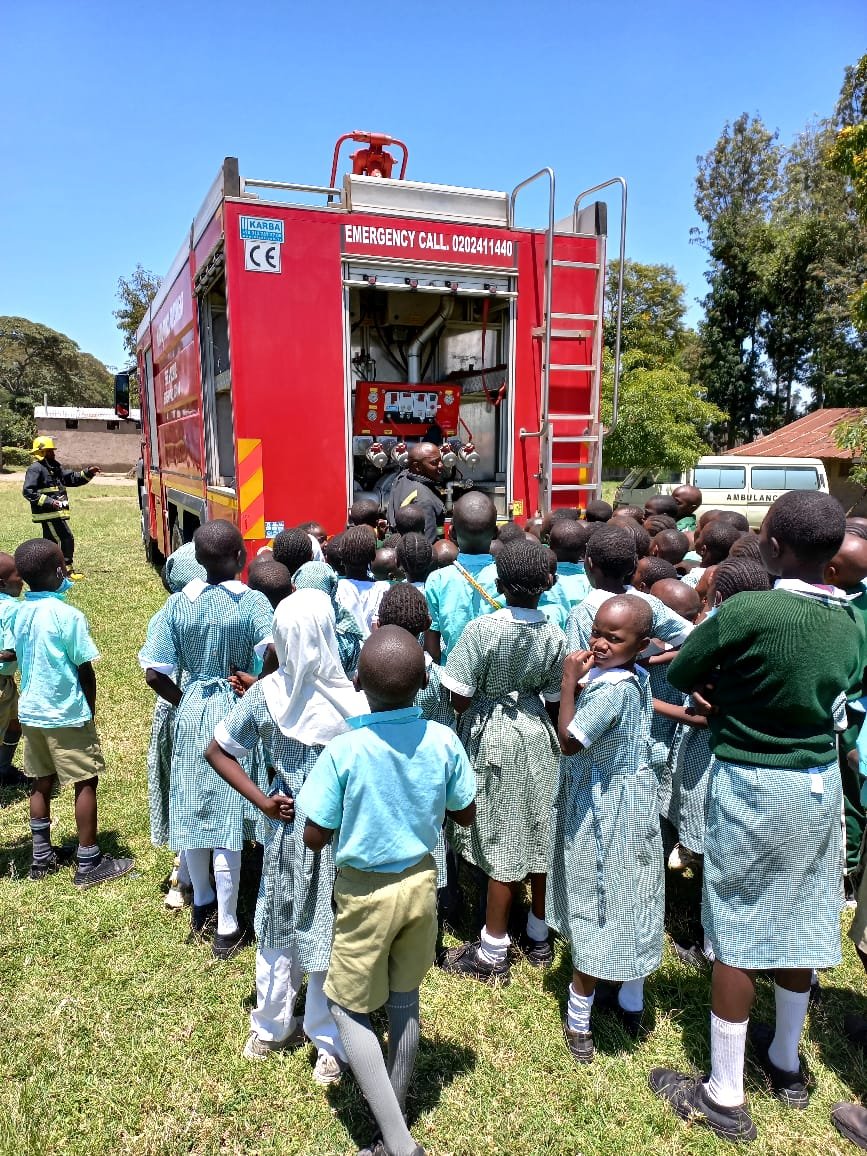
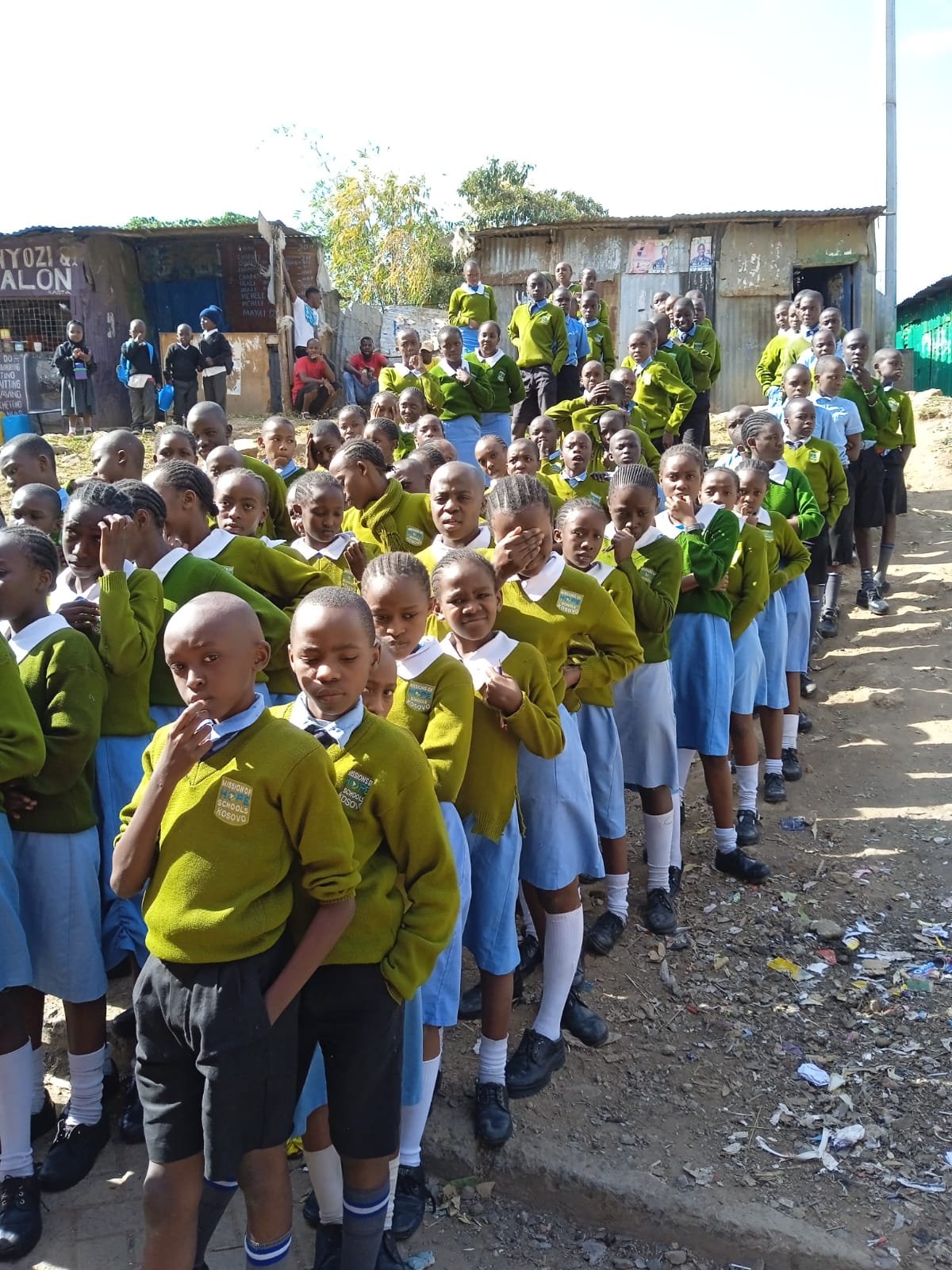
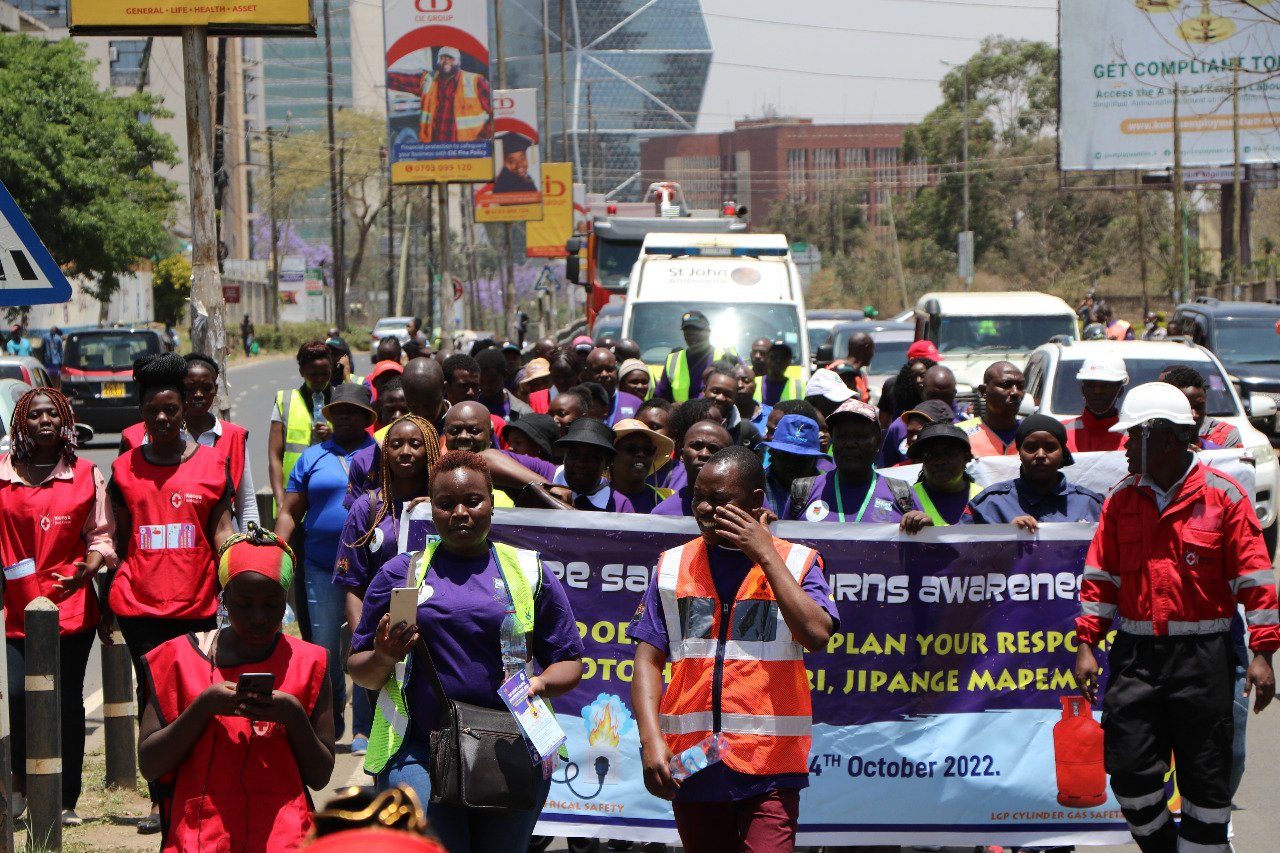
This October, Kenya participated in Fire Prevention week - at least 10 counties participated and more than 40,000 individuals received direct training in fire prevention! Children and adults conducted fire drills in their schools and businesses. Firefighters went into their communities and shared safety messages in churches, schools, businesses and anywhere that people gathered!
Indirectly, the impact was pretty great too! There were walks to raise awareness and media campaigns to share the work! Millions were impacted indirectly through these collaborations!
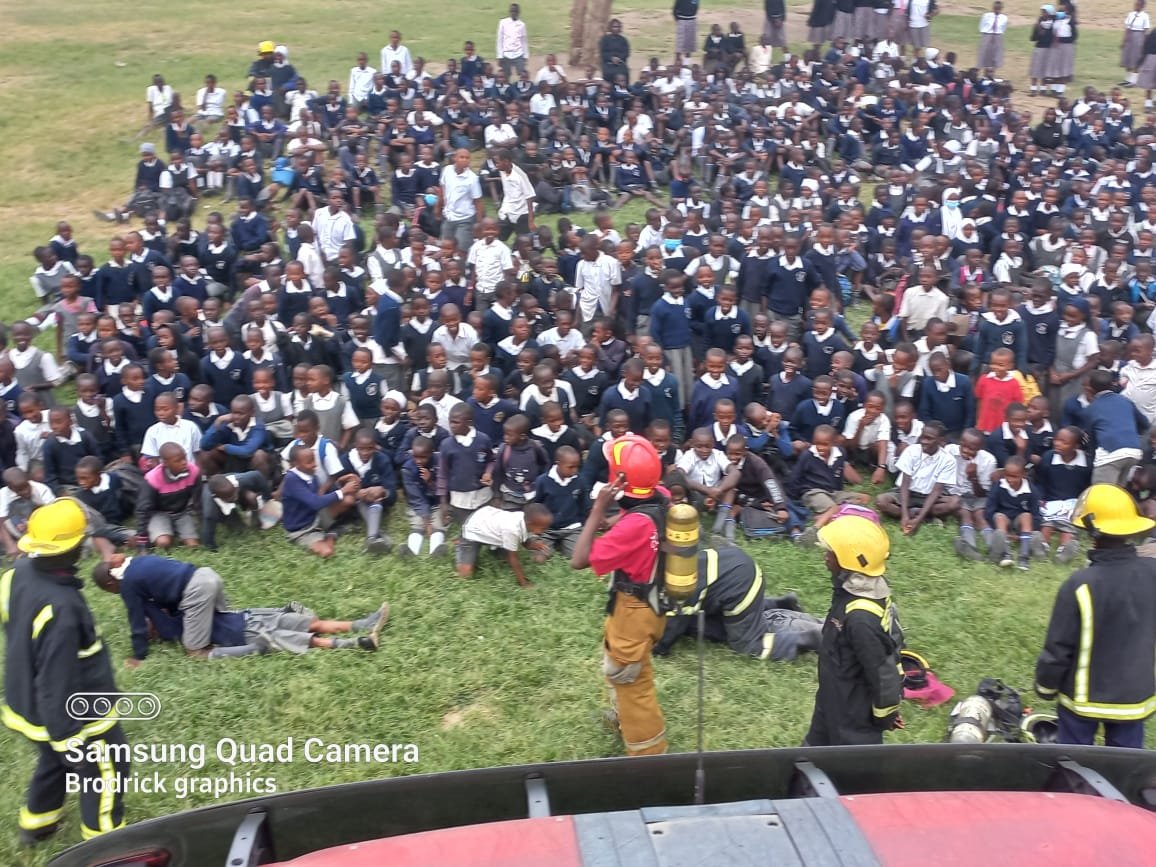
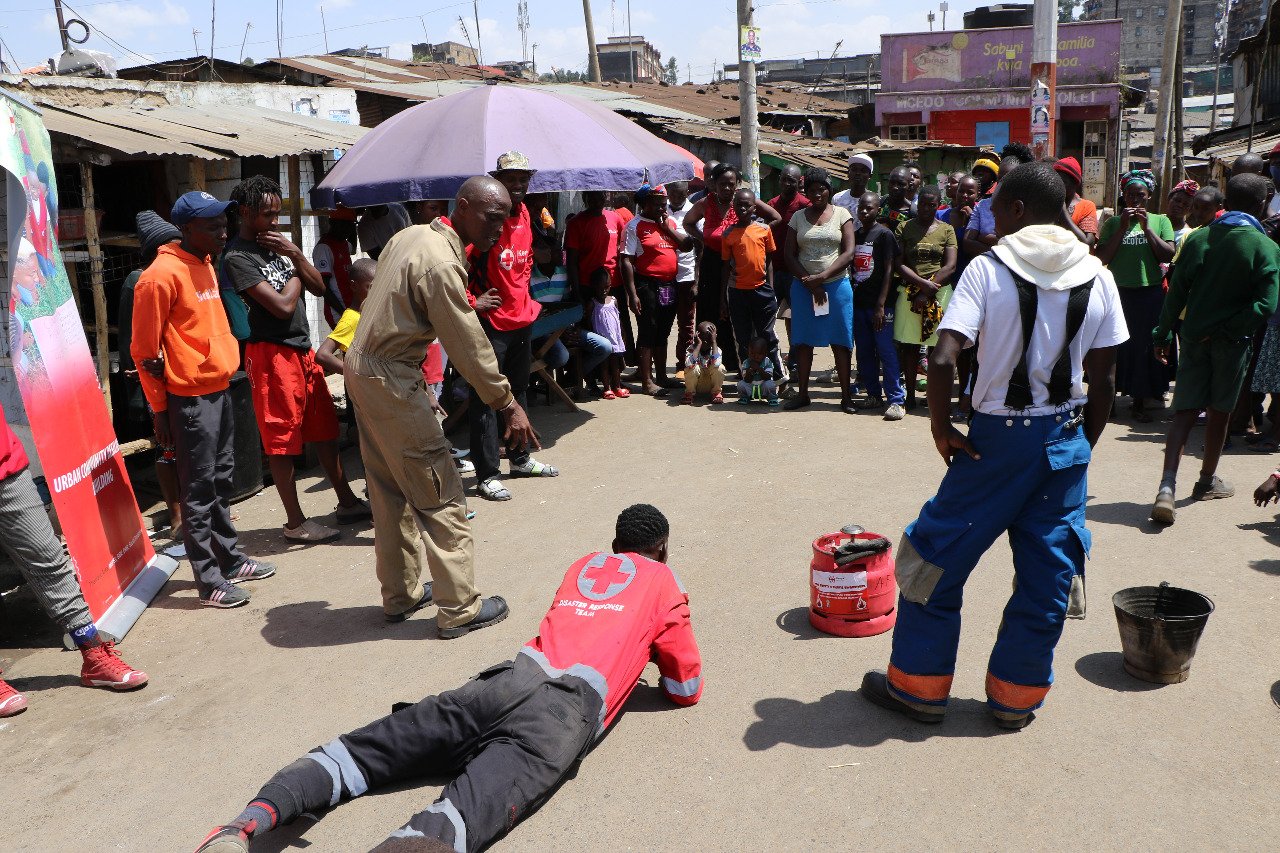
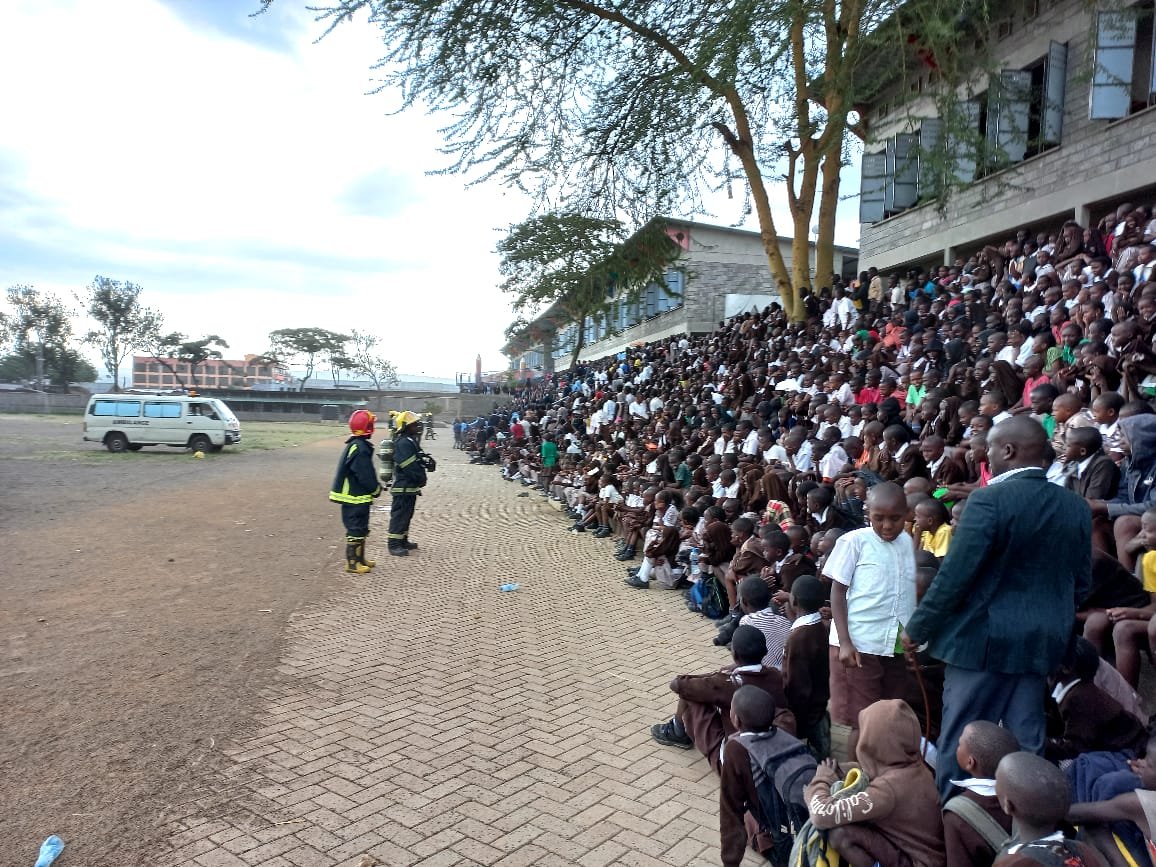
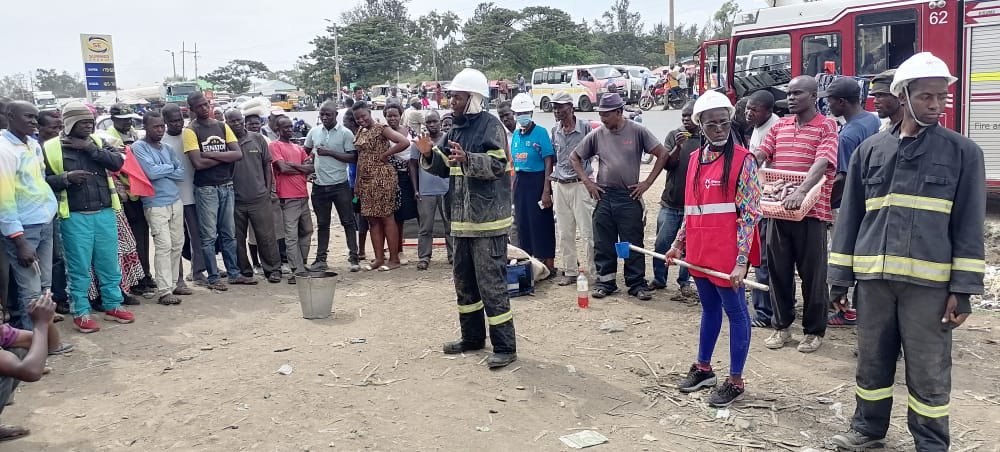
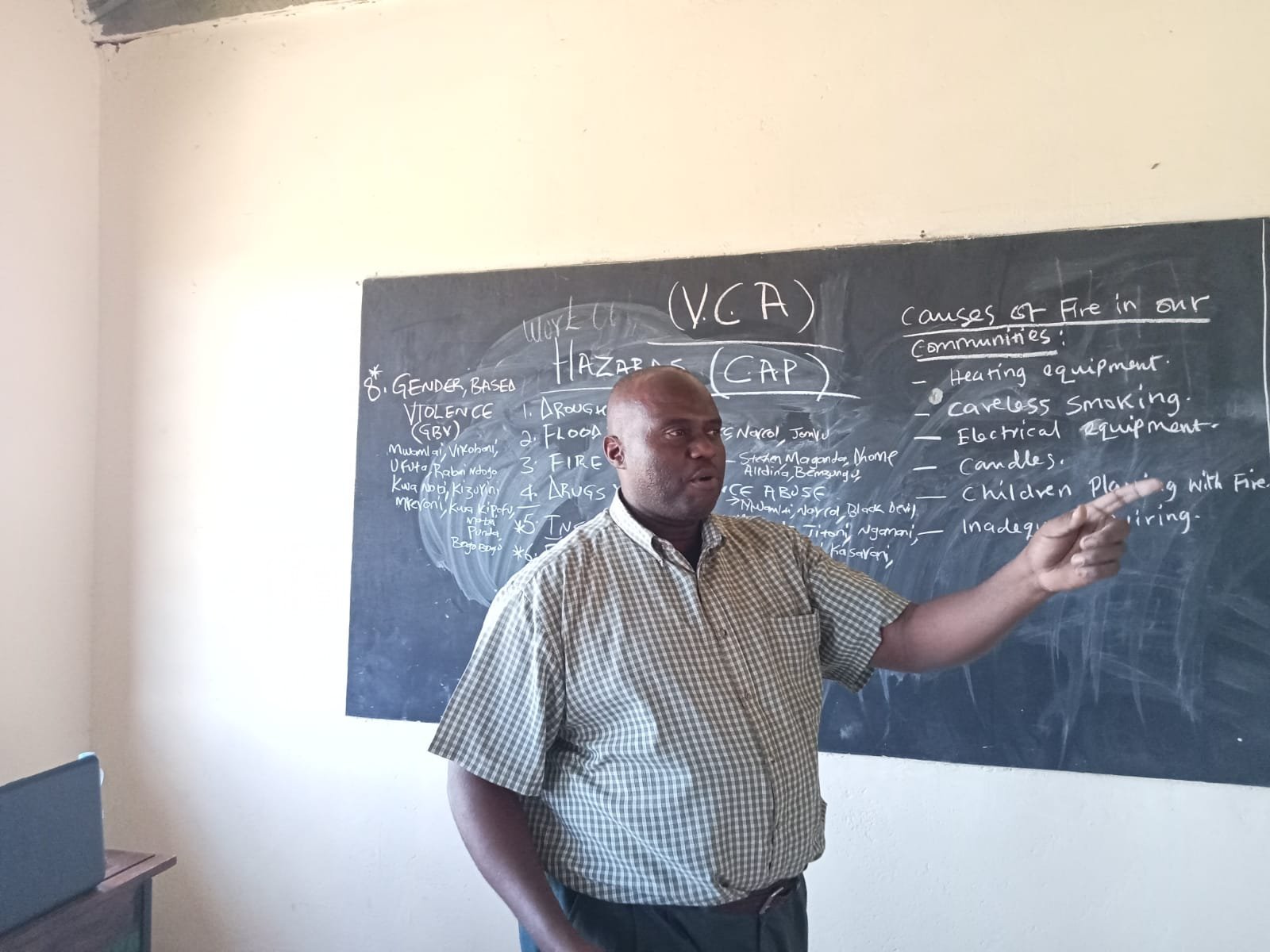
At Africa Fire Mission we are committed to continue to increase the impact of fire prevention and safety to save lives! It is important to our mission just as training firefighters. Our curriculum is available for free on our website - check it out here: Fire Safety Curriculum and we’d love for those using our curriculum to report their training experiences here: Report
To all the firefighters in Kenya that are spreading the message of fire safety - Asante Sana (thank you!) We can’t want to see the multiplication continue in Kenya and across all of Africa!