
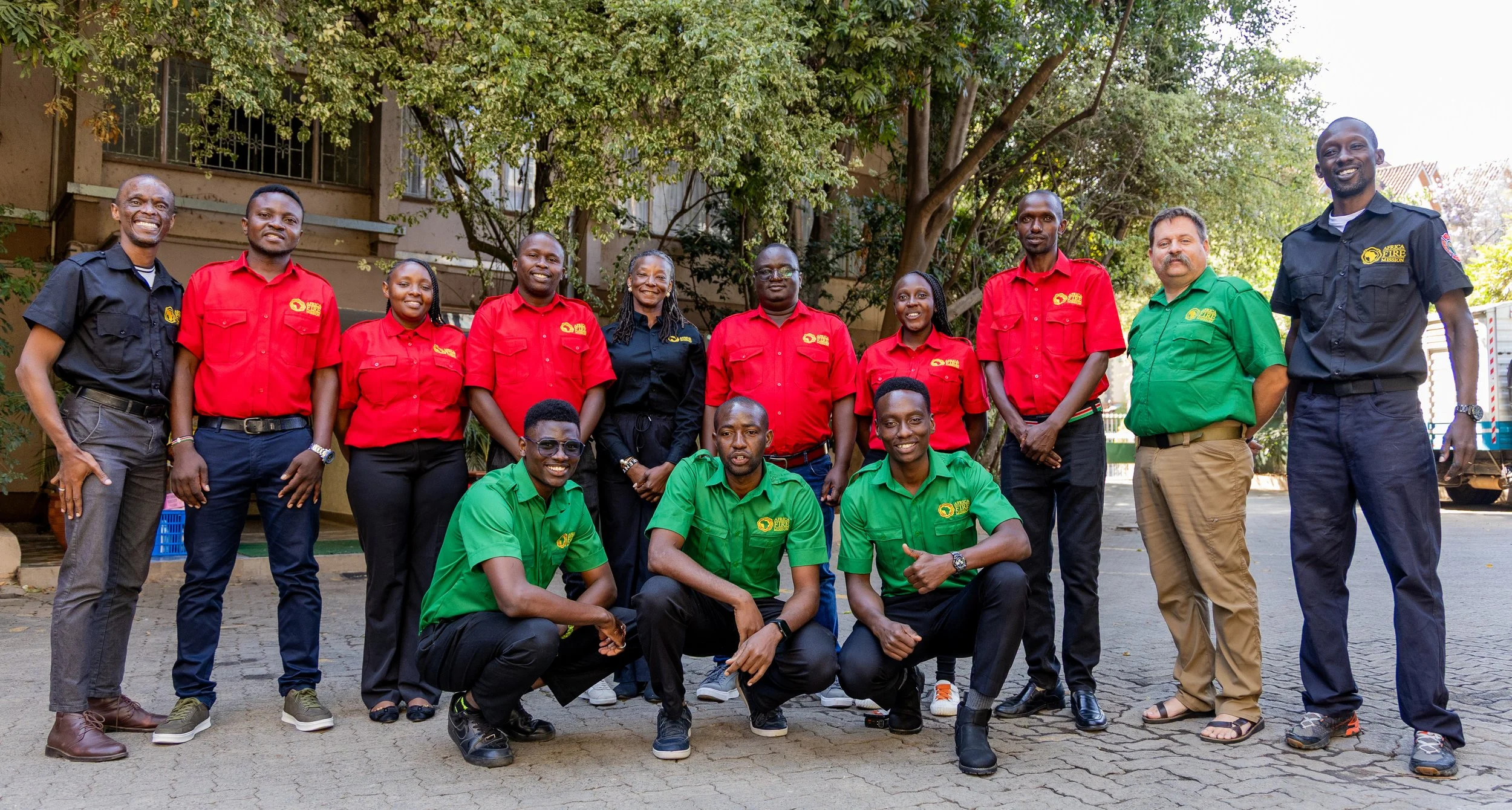
At the beginning of Africa Fire Mission’s 2026 Fire Prevention Internship, participants gathered for orientation, introductions and their first conversations with the mentors who would guide them. By the end of the program, those same interns were leading fire safety assessments, evacuation drills and safety education activities across Nairobi and Machakos County.
Together, they reached 20,606 people at 17 schools and centers in just 7 days.
The journey began at Little Wonder School, where the interns observed mentors Timothy and Joshua conduct a fire safety assessment and evacuation drill. They watched, asked questions and began learning how to identify hazards, evaluate evacuation procedures and engage learners and staff.
That evening, Mike Kull, Africa Fire Mission’s Programs Director, introduced the interns to the Kenya School Fire Safety Manual. Timothy, Joshua and Samuel helped them learn to document their observations and develop clear recommendations.
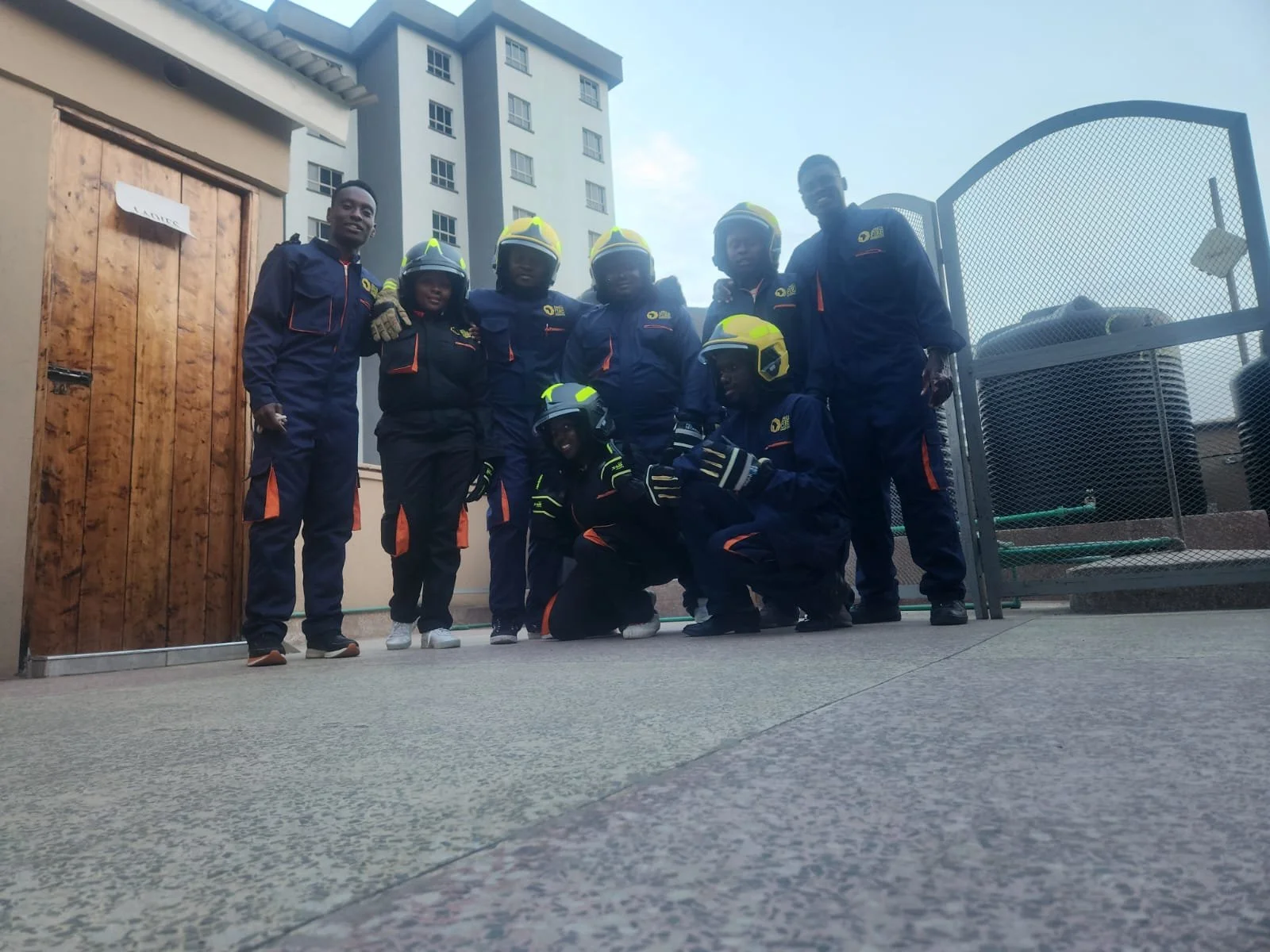
The AFM Internship team learned from their mentors and each other with hands-on training experiences.
The interns were already thinking beyond the forms in front of them. They asked how evacuation plans accounted for people with disabilities and discussed the need for accessible routes. When a learner raised concerns about fire extinguishers being too heavy for children, the group considered what age-appropriate fire safety education should emphasize: raising the alarm, evacuating safely and seeking help.
A visit to the Mathare informal settlement gave the interns a deeper understanding of why this work matters. Narrow pathways can prevent fire engines from reaching an incident. Closely constructed buildings can allow flames to spread quickly. Unsafe electrical connections, limited water supplies and congested evacuation routes create additional risks for both residents and responders.
These were no longer abstract concepts. The interns could see the challenges, talk with community members and consider how prevention, preparedness and collaboration could save lives.
As the week continued, the interns took on greater responsibility. At schools in Nairobi and Machakos County, they practiced managing large groups of learners, giving calm instructions and maintaining awareness of everything happening around them. They taught Stop, Drop and Roll, demonstrated how to crawl safely beneath smoke and helped learners and staff understand what to do during a fire emergency.
Each school presented different challenges. Some lacked adequate assembly areas. Others had narrow evacuation routes or neighboring structures that could allow a fire to spread onto school property. At one location, five campuses shared a common assembly point.
The interns learned that leadership requires more than following a set plan. It means assessing the situation, working together and adapting to the needs of each school.
By mid-week, the transition from learning to leading was clear. Working in pairs, the interns traveled to different schools, conducted assessments, facilitated evacuation drills and completed reports. Their mentors remained available, but the interns were now applying the skills themselves.
They had become leaders.
Reaching 20,606 people is an extraordinary accomplishment, but the internship’s greatest impact is ahead. Each participant now carries practical knowledge in fire prevention, evacuation planning, emergency communication, hazard identification and community engagement.
Africa Fire Mission’s model is built on replication. The lessons shared during one internship become more powerful when participants take them back to their workplaces, schools and communities, mentor others and continue the work.
AFM extends its sincere appreciation to the 2026 interns, mentors, U.S. team leaders, AFM staff and community partners who made the internship possible. We are especially grateful to Mission of Hope International and every participating school and center for welcoming the team and sharing our commitment to safety for all.
The 2026 internship has concluded, but its story is still being written—through every lesson shared, every drill conducted and every community made safer.